


Kamel Mennour
The role of a gallerist isn’t to lead, but to support
“Part of my role involves promoting Paris as a global artistic capital”
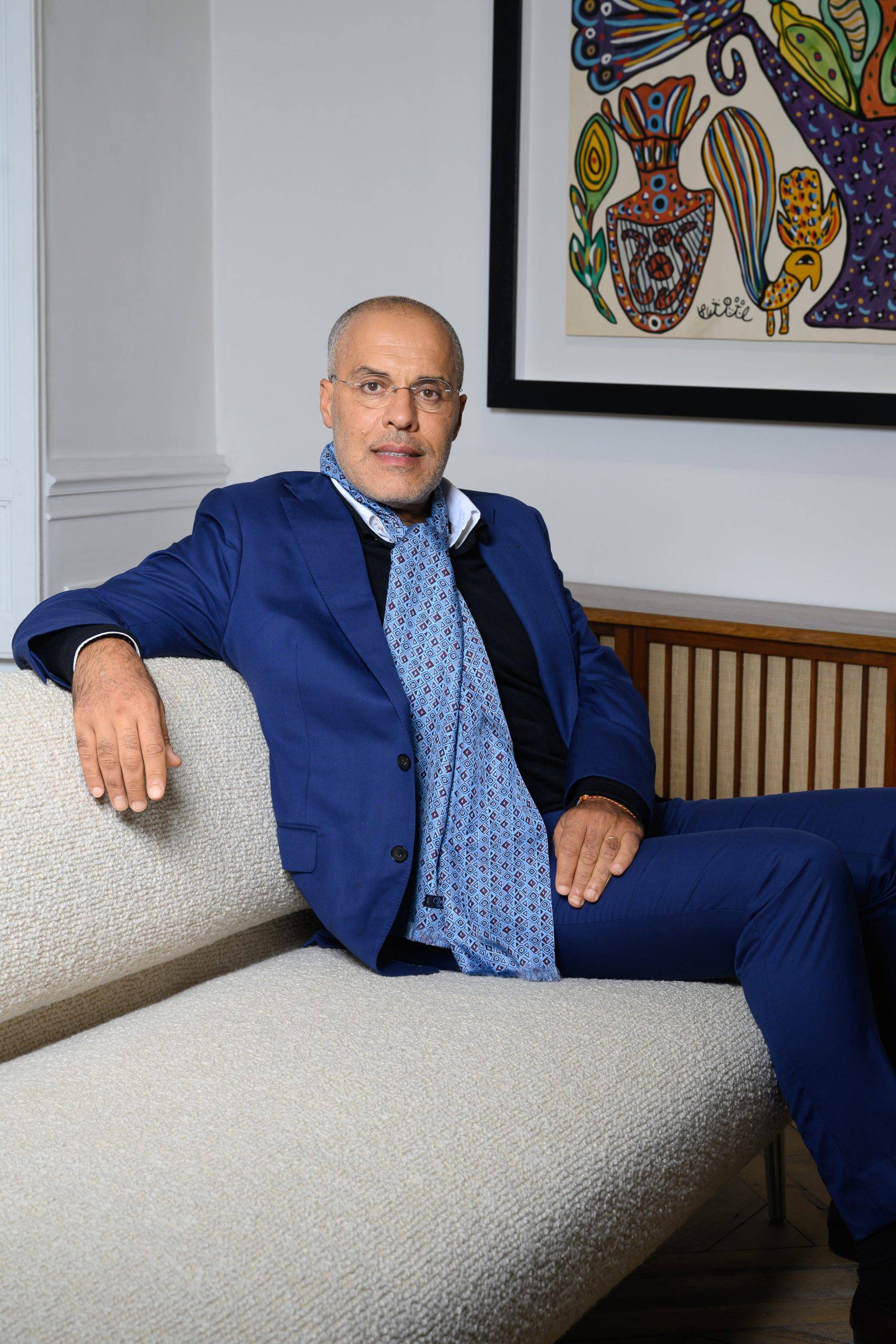
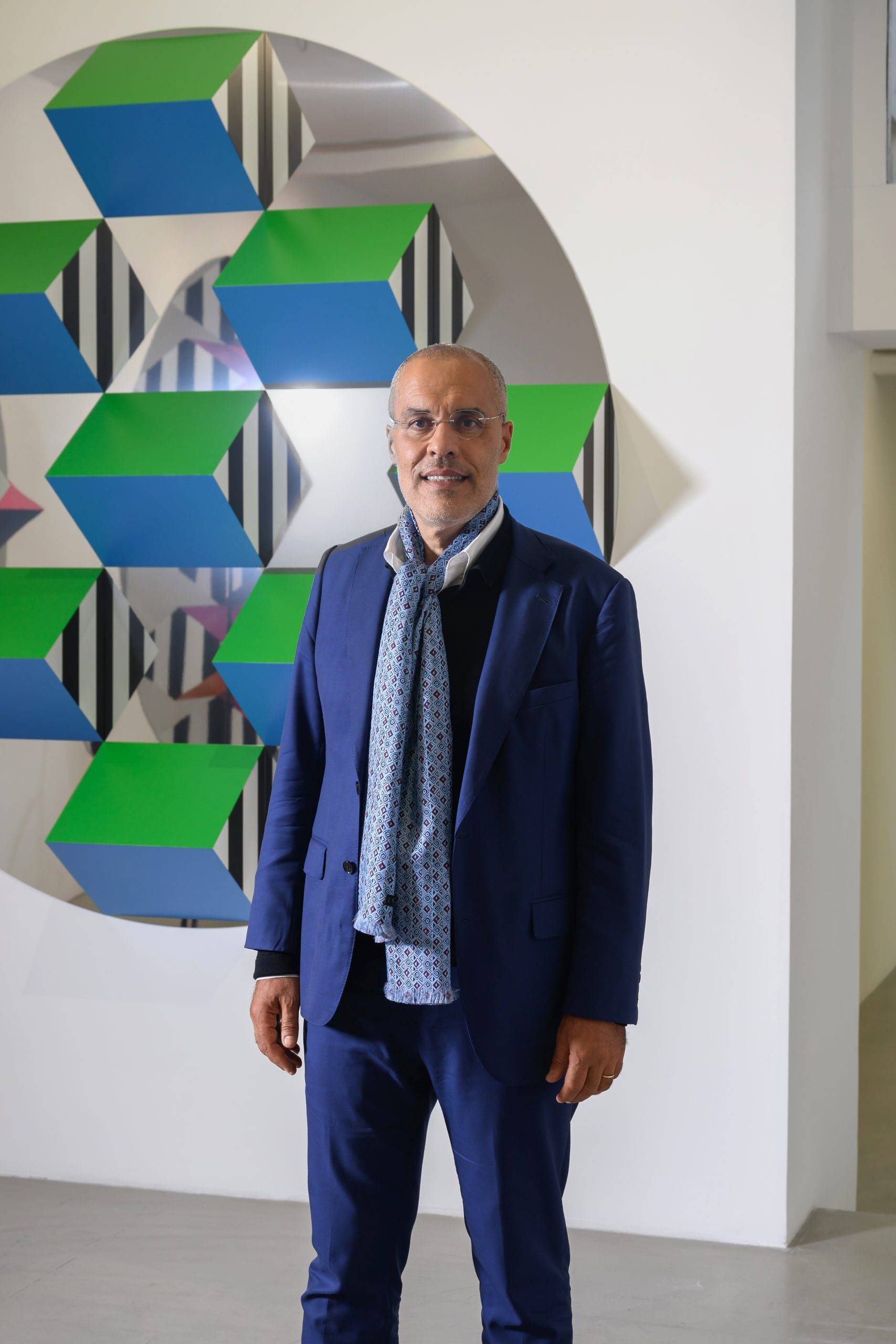
At the height of Paris Art Week, we caught up with one of the key players on the contemporary art scene: Kamel Mennour. We met him at his flagship gallery at 47 Rue Saint-André-des-Arts, where he has been representing artists for over twenty years. The gallery owner shared his thoughts on the role of a gallerist, his involvement with Parisian institutions and initiatives, the state of the market, and his impressions of this year’s edition of Paris Art Week.
In Paris, October is the month of art par excellence. For a gallerist like yourself, these days must be both exhilarating and exhausting. Do you still get to enjoy the experience like a visitor?
KAMEL MENNOUR:
Indeed, October is quite a hectic time of year: with Art Basel Paris, our own exhibitions, and off-site events, the energy is incredible. But it is precisely this buzz that fuels me. First and foremost, I remain a visitor, a curious observer. These are days when you see a lot of things and meet a lot of people. Above all, it’s a time of discovery. That’s what drives me forward.
Despite the uncertainties surrounding the disappearance of FIAC, Paris has managed to reaffirm its position as a major cultural hub, particularly with Art Basel. Is this belief in the capital’s dynamism and its artists the reason why you haven’t expanded the gallery elsewhere?
KAMEL MENNOUR:
Absolutely. Paris is a city of art and history, but also of creative drive. I have always believed in this city. Part of my job involves promoting the image of Paris as an artistic capital. My decision to remain here is guided as much by my personal attachment to the city as by strategic thinking: I firmly believe that we can have a major international presence without branching out.
You currently represent prominent artists like Daniel Buren, whose work is currently on display in your gallery at 47 Rue Saint-André-des-Arts. How did your partnership come about?
KAMEL MENNOUR:
Meeting Daniel was a defining moment that changed my life. I have often recounted how we met on a plane to Korea twenty years ago. Today, I am presenting his eighth solo exhibition at the gallery. Our collaboration is built on trust, and we’ve been developing over the years. Each exhibition with him is an intellectual, spatial and aesthetic challenge. It’s a huge privilege to work with him, and I take my role as his curator very seriously.
At the same time, in your space at 6 Rue du Pont de Lodi, you’re showcasing the work of Lee Ufan. How would you describe your relationship with him?
KAMEL MENNOUR:
Lee Ufan is an outstanding artist, thinker, and philosopher of art, whose worldview inspires me greatly. I have been delighted to work with him since 2013. We have collaborated on numerous projects: the Château of Versailles, the Hamburger Bahnhof, the Rijksmuseum, etc., and I am already looking forward to future ones. Working with Lee Ufan is a unique experience: he encourages us to slow down, to be silent, to embrace emptiness as a presence. His work opens up a space for contemplation that shifts our perspective and our relationship to time.
How do you usually describe the relationship between an artist and a gallery owner?
KAMEL MENNOUR:
It’s a relationship based on trust, patience, sometimes tension, but always respect. The role of a gallery owner isn’t to lead, but to support. Sometimes you have to step back and, above all, listen. We are here to give artists the resources they need to exist.
Of all the institutions, you chose to donate no less than 180 works to the Musée d’Art Moderne de Paris. Was this donation discussed with the artists involved, and why did you choose this museum specifically?
KAMEL MENNOUR:
I’ve always lived and worked in Paris. With the Centre Pompidou closed to the public until 2030, the Musée d’Art Moderne de Paris was the obvious choice. This donation is a way for me to pass on what art has given me, by returning it to the community. The donated works will be exhibited at the museum in 2027.
At the moment, the market seems to be dividing into two directions: some galleries are closing to explore alternative concepts, while others continue to expand. How do you interpret this polarization?
KAMEL MENNOUR:
We’re in a moment of transformation. There’s tension between the traditional gallery model and the new economic, social, and digital realities. But I don’t think there’s a “right” approach. Each gallery has to come up with its own model based on its artists and history. The important thing is to be consistent and sincere.
Do you still believe in the traditional model of a physical gallery, or are you considering other approaches for the future?
KAMEL MENNOUR :
I still deeply believe in it. Nothing will ever replace the experience of seeing a work of art in person. But we also need to explore other paths, especially digital ones, to reach new audiences. My 23-year-old son often reminds me that: while the gallery remains essential, we also need to reach out to younger generations where they are. It is this balance between tradition and innovation that I seek to preserve.
The Mennour Institute, which you founded in 2023, promotes research and education in the field of art. Among its initiatives, the Emergence hub stands out. What does this project entail and what are your goals for it?
KAMEL MENNOUR:
Mennour Emergence, a project initiated by our Global Executive Director Jessy Mansuy, aims to support young artists in the early stages of their careers. It is a unique program that illustrates the gallery’s longstanding commitment to promoting the work of new generations. I am looking forward to discovering the winning artists of the third edition, for which we will be opening the call for applications in a few days.
This year’s program features six artists. On what criteria do you base your selection?
KAMEL MENNOUR:
The artists are selected by a committee made up of professionals recognized for their commitment to emerging creation. Last year, the jury included Sam Bardaouil, Till Fellrath (Hamburger Bahnhof), Anna Labouze, Keimis Henni (Artagon), Horya Makhlouf (Palais de Tokyo), Jessy Mansuy, and Christian Alandete. What matters is perhaps the uniqueness of their perspective and the coherence of their message. What they have in common is that they have something to say about the world.
Would you tell us about your favorite Art Week projects?
KAMEL MENNOUR:
There are so many. I’m very proud of our Daniel Buren and Lee Ufan exhibits at the gallery, but I’m also thrilled to present the work of Ruoxi Jin, who just joined the Emerging Artists program. A few steps away from the gallery, at the Louvre Museum, Mohamed Bourouissa is presenting his installation Les 4 temps, the first video to be acquired by the Louvre. And at the Bourse de Commerce, there is the beautiful exhibition Minimal with Lee Ufan and François Morellet, whose centenary we will be celebrating in 2026!
Interview by Say Who
Portraits: Michaël Huard


