


Patrizia Sandretto Re Rebaudengo
The Foundation is a living space, an archipelago of different places, each with its own soul
«Artists interpret the complexity of our time. Supporting an emerging talent means giving them time, tools, and trust»
If Italy had an ambassador for contemporary art in the world, her name would undoubtedly be Patrizia Sandretto Re Rebaudengo. Thirty years ago, she was a young woman from Turin with a promising career ahead of her in the family business — the Sandrettos, those postwar industrial pioneers who produced Italy’s first plastic injection molding machines — and a seemingly preordained path. Then she took a different turn: art and collecting. In 1995, exactly thirty years ago, she founded the Fondazione Sandretto Re Rebaudengo in Turin, transforming a private intuition into an international beacon for artists and art lovers, with exhibitions that attract a cosmopolitan and curious audience. Collector, philanthropist, and an authoritative voice on the boards of some of the world’s leading museums — from the MoMA in New York to the Tate in London, from MACBA in Barcelona to RAM in Shanghai — Patrizia Sandretto Re Rebaudengo has never liked the label “patron.” And yet, when defining those who today support and work for contemporary art with rigor, intelligence, and passion, her name inevitably comes up. A graduate in Economics and Commerce, she discovered contemporary art in the 1990s and never looked back. With Piedmontese precision and a touch of inspired folly, Patrizia Sandretto Re Rebaudengo has turned art into a mission, and her Foundation into an “archipelago” of living places, open spaces, and international projects — where contemporary art steps out of museums and into the life of communities. We meet her during the days of Artissima, and above all, on the eve of an important anniversary….

Thirty years of the Foundation: which moments stand out as the most emblematic of this journey?
I remember very clearly the day I established the Foundation, April 6, 1995. Looking back at the artists, exhibitions, works, and countless projects, I feel these thirty years have flown by. I look to the past without nostalgia, but with satisfaction for what has been achieved — and with my attention always on the present and the future. Today, the Foundation is a living space, an “archipelago” — to use an image gifted to me by Hans Ulrich Obrist — of different places, each with its own soul, architecture, and territory. The opening of each venue has marked a milestone: in 1997, Palazzo Re Rebaudengo in Guarene, an 18th-century family home nestled in the Roero hills; in 2002, the Turin art center in the San Paolo district, designed by architect Claudio Silvestrin; and in 2019, the Sandretto Re Rebaudengo Art Park on the San Licerio Hill in Guarene, an open-air sculpture park freely accessible to all. Another key moment was in 2017, when I founded Fundación Sandretto Re Rebaudengo Madrid, dedicated to exhibitions in unusual and little-known places in the Spanish capital, a city I hold very dear.
What has been the biggest challenge in bringing contemporary art into dialogue with the public and the city of Turin?
The Foundation was created with the goal of making contemporary art accessible to everyone, creating spaces for dialogue, education, and experimentation. The main challenge was helping people understand that contemporary art isn’t distant or elitist, but a shared arena for reflection. Since 2002, we have adopted the practice of cultural mediation to foster encounters between artworks and audiences, creating participatory experiences. Today we offer a rich program of educational projects and workshops for all ages — from toddlers to adults, schools to families, and even vulnerable communities — working with a wide network of professionals across disciplines complementary to contemporary art.
Your collection and the Foundation have always supported emerging artists. What convinces you to invest in an as-yet-unknown talent?
The Foundation was born thanks to artists, and for artists — to give form and space to their visions. It continues to dedicate itself to making their thoughts, perspectives, and questions visible. Artists have the ability to interpret and reflect the complexity of our time, whether through innovative or traditional visual languages: an algorithm-generated video, a painting, a sculpture, a drawing. I love works that pose questions, build connections, experiment, and challenge conventions. Supporting an emerging talent also means taking on responsibility: accompanying the artist’s growth, offering tools, time, and trust to develop their ideas.
If you could go back to the early years of the Foundation, what advice would you give yourself?
I would repeat the advice my father gave me thirty years ago, when I first spoke to him about creating an institution: “If you’re going to do it, do it well.” I’ve tried to follow that advice every single day, and I hope I’ve succeeded.
How have you seen the role of women in art evolve over these thirty years?
Over the past thirty years, the role of women in art has changed profoundly — though the path toward full equality isn’t over. From the 1990s to today, women artists have gained greater visibility and self-determination. Many voices once marginalized are now recognized. Still, much remains to be done: women’s presence in museum collections and major exhibitions has grown, but remains lower than men’s, as does their representation in the art market. For me, being a woman has always been an opportunity, never a limitation. Growing up in a family where gender equality was a given, I’ve been fortunate to move within a world — contemporary art — that has developed a strong awareness of inclusion and rights. One of the guiding principles of my collection has always been attention to women artists: Cindy Sherman, Barbara Kruger, Jenny Holzer, Sherrie Levine, Shirin Neshat, Vanessa Beecroft. Their works have taught me a great deal. As the founder of an institution, I’ve felt a responsibility to give space and voice to women. In 2004, the Foundation dedicated an entire year’s programming to female artists, beginning with a solo exhibition by Carol Rama — an extraordinary figure who claimed her creative freedom in a challenging context. In 2006, I created the StellaRe Prize to honor women who have opened new horizons in culture, science, politics, and economics. Today, I see a generation of women artists, curators, collectors, and art professionals who are more conscious and autonomous — and that transformation gives me great hope.
If you had to describe your collection in three words, which would you choose?
Visionary, because it always looks to the future, anticipating the questions and languages of our time. Relational, because it’s built through continuous dialogue with artists, trust, and long-term exchange. Committed, because it believes in art’s role as a tool for awareness, openness, and social transformation. The collection lies at the heart of the exhibitions celebrating the Foundation’s 30th anniversary: in September, we inaugurated La bella estate at Palazzo Re Rebaudengo in Guarene, retracing the collection’s origins. In a few days, we’ll open News From The Near Future in Turin — a two-venue show revisiting thirty years of collaborations, projects, commissions, and experiments..
Which artwork in the Foundation’s history has had the greatest impact on the public, and why?
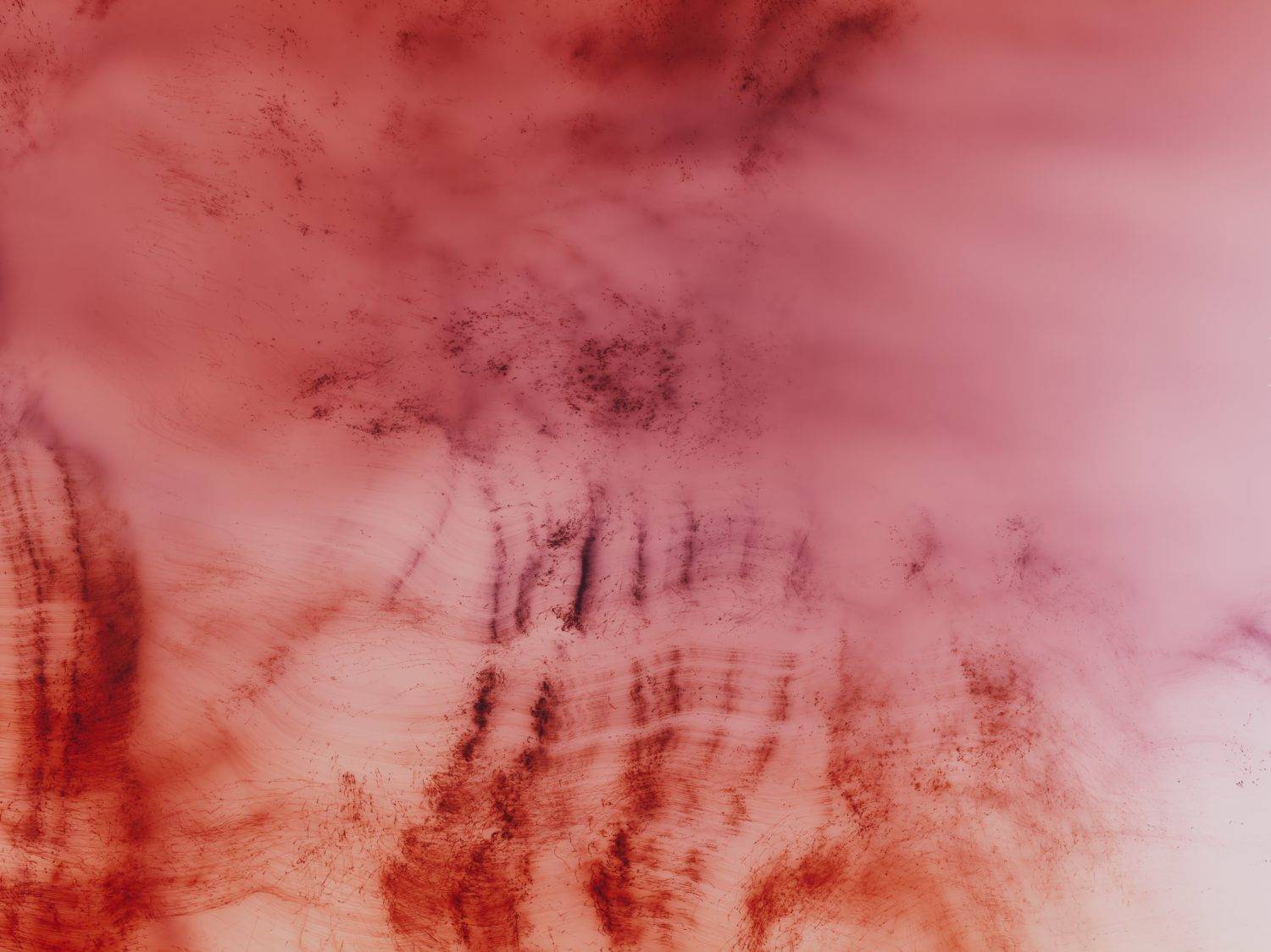
Among many works that have marked the Foundation’s story, I believe Aletheia by Berlinde De Bruyckere has been one of the most powerful and moving for the public. It speaks of fragility, memory, and rebirth — and during the lockdown, it took on an even deeper meaning. In those suspended months, Aletheia became a mirror of the human condition: the body as a place of vulnerability but also of resilience, matter as testimony to energy in transformation. Many visitors experienced it as almost cathartic — a moment of silence and awareness in an uncertain time. Its impact lies in its ability to connect individual intimacy with a universal, collective dimension.

What dreams or challenges still lie ahead?
The next big step will be the opening, in 2026, of our third venue on the Island of San Giacomo in Venice. I had long dreamed of a Venetian home for the Foundation, and when my husband and I discovered the island, we immediately knew it was the right place. This small strip of land in the lagoon is steeped in ancient stories and precious natural beauty. For three years now, the island has been my outpost of dreams. The restoration work is guided by respect for its history and ecosystem. Abandoned for over sixty years, it has been a monastery, a pilgrim stop, a vineyard, a garden, and a military outpost. We are transforming it into a garden and restoring its ruins into exhibition spaces. The island will host exhibitions, performances, residencies, conferences, and live events, bringing together art, architecture, music, cinema, theater, and dance. It will be entirely energy self-sufficient — an eco-sustainable hub for exploring urgent issues such as climate change through art. The Foundation “christened” the island in April 2022 during the 59th Venice Biennale with In the tired watering by Jota Mombaça, a poetic performance on the restlessness and fluidity of water. For the 60th Biennale in 2024, we presented Pinky Pinky “Good” by Korean artist Eun-Me Ahn — a collective ritual of blessing inspired by shamanic tradition, conceived for the island to celebrate its rebirth as a new home for contemporary art.
Interview: Germano D’Acquisto
Portraits: Ludovica Arcero


