


Wangechi Mutu
I create in order to transform myself: my studio is a cocoon where I shed my skin
“Myth reminds us that imagining is healthy. That we need to leave open spaces in our minds. Myth nurtures empathy, courage, and gentleness”
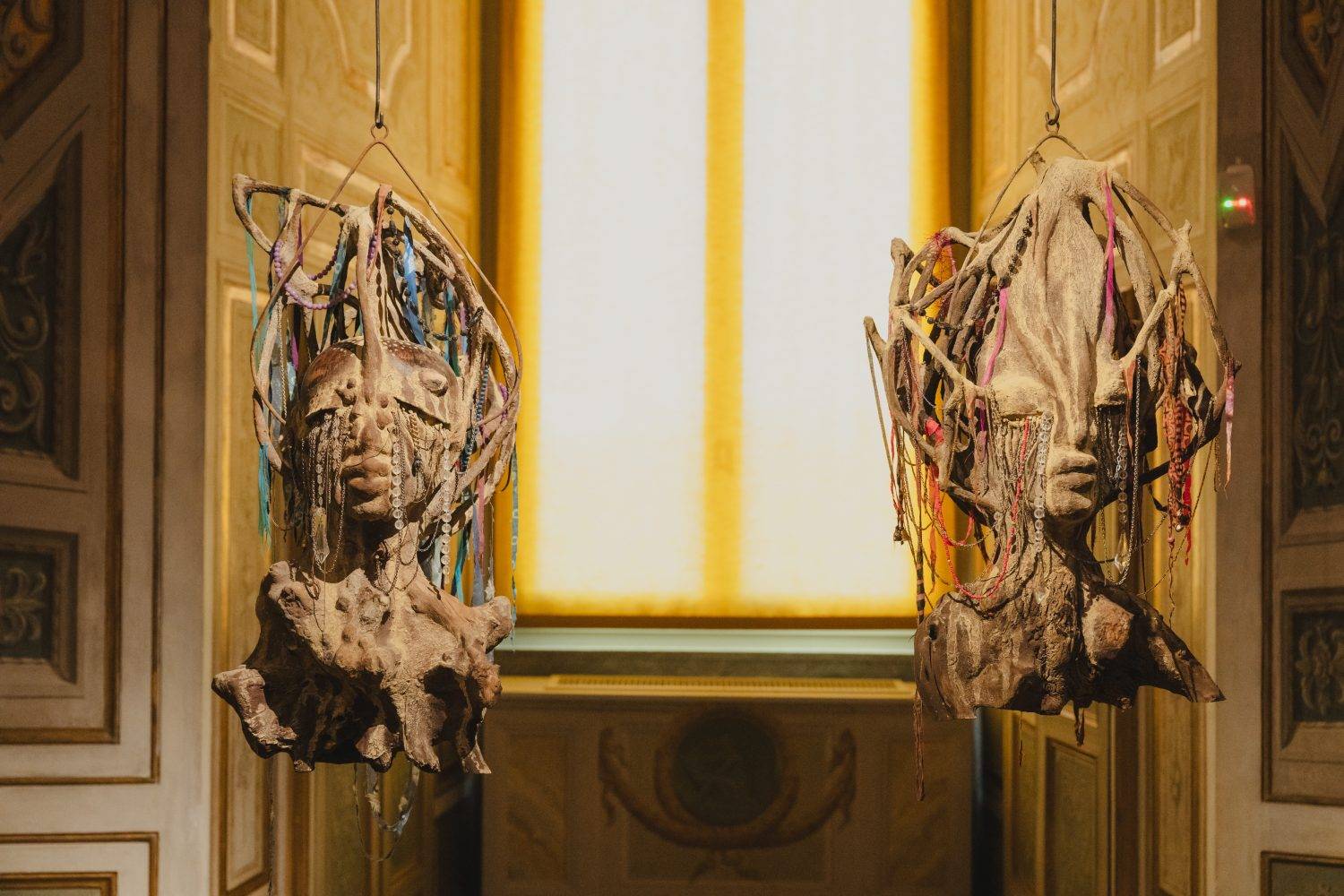
Some artists carefully keep a distance between their work and the museum that houses it. Others, however, fully inhabit the space, reappropriating it as an integral part of their artistic expression. With the sensibility of someone who knows the weight of history, and the boldness of someone unafraid to question it, Wangechi Mutu does a little bit of both. At the impressive Galleria Borghese — the renowned Baroque temple where each corner is brimming with the legacy of the past — her exhibition “Black Soil Poems” is running from June 10th to September 14th. Something truly brilliant is at work there. Sculptures are hanging from the ceiling, hybrid figures seem to sprout from the ground and contemporary caryatids are watching over the museum with a composure that can only be achieved after centuries of waiting.
Mutu doesn’t dictate anything, she only makes suggestions. She engages in a visual dialogue with Canova and Bernini, with busts and allegories, using living, shifting and unstable materials such as bronze, feathers, mud, water, video… Far from the usual marble structures that remain unchanging forever, her works speak of transformation, loss and rebirth. Kenyan by birth, American by adoption, Mutu has made collage — mental, cultural, material — her mother tongue. Her vision of the world is perfectly clear: womanhood is not a concept, it’s a strength. Her characters are not symbols, but actual entities. They carry ancient stories, deeply entwined roots, unspoken rage and a touch of irony – because yes, even goddesses have a sense of humour. In the Baroque heart of Rome, this exhibition is anything but decorative: it’s a quiet, elegant, and powerful questioning. A black soil that, rather than concealing, reveals her vision. We met the artist in the museum corridors, and later in the Secret Gardens.
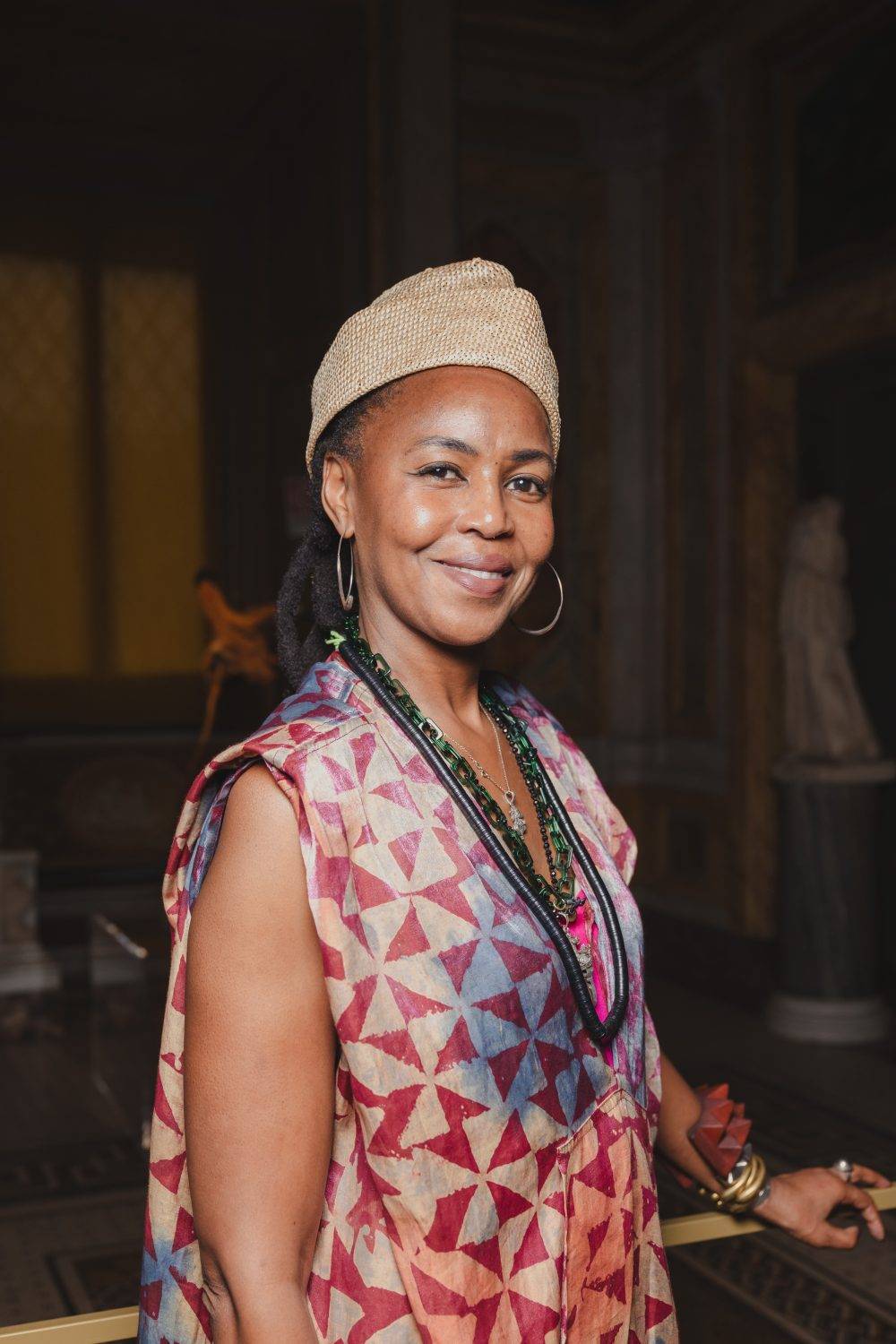
How did you manage to merge your artistic vision with a historic space like Galleria Borghese?
Wangechi Mutu:
I love liquid materials — pigments, inks, dense and porous earths — which I use in my collages, sculptures, and even performances. I approached this historical place as if moving within something halfway between capoeira and ritual — always in a state of flow. Present, yes, but never static.
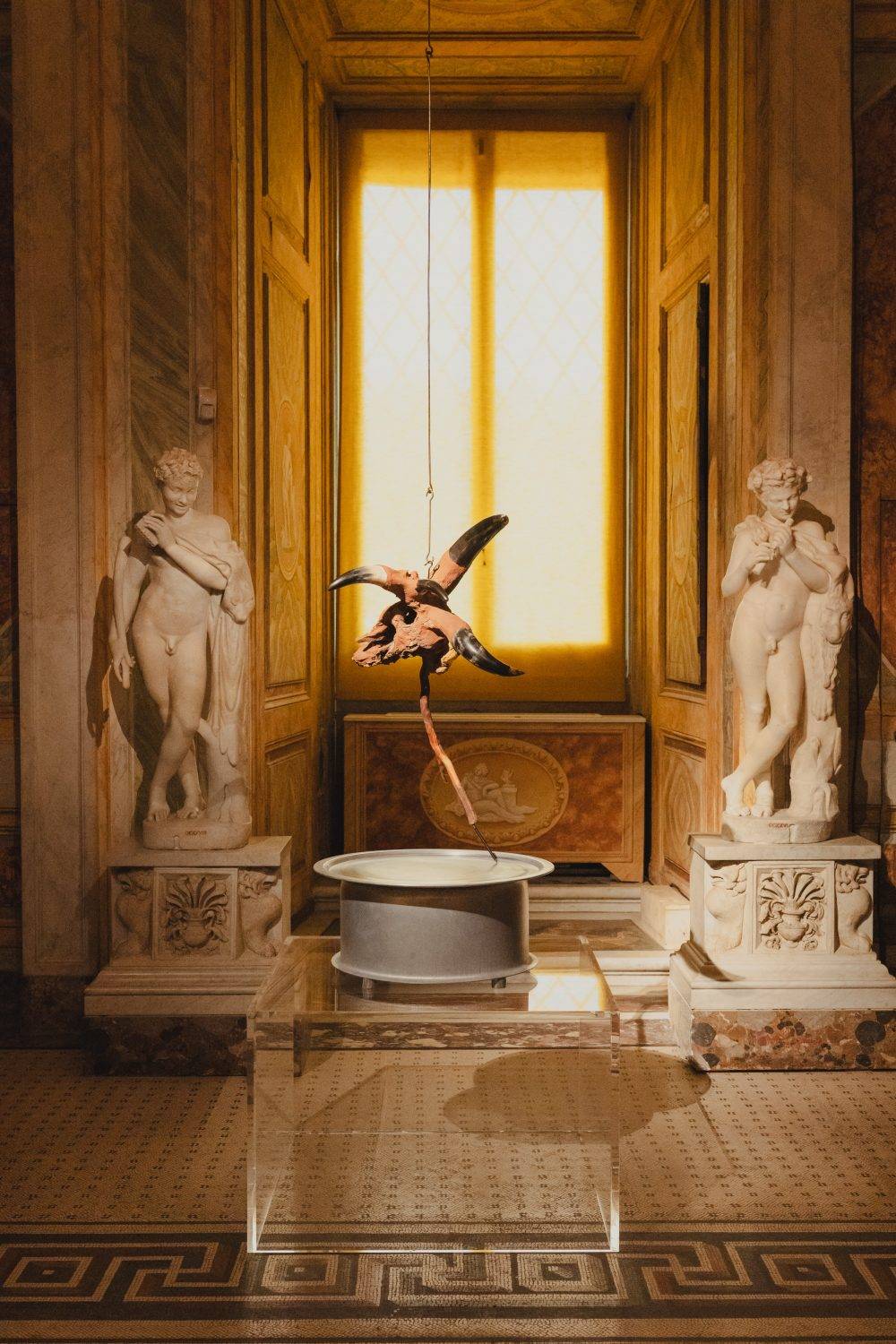
Many of your works move between reality and imagination. What can myth teach us in a time so dominated by technology?
Wangechi Mutu:
Myth reminds us that imagining is healthy. That we need to leave open zones in our minds — suspended spaces. Myth nurtures empathy, courage, softness. Precious qualities in a world that’s become overly rational.
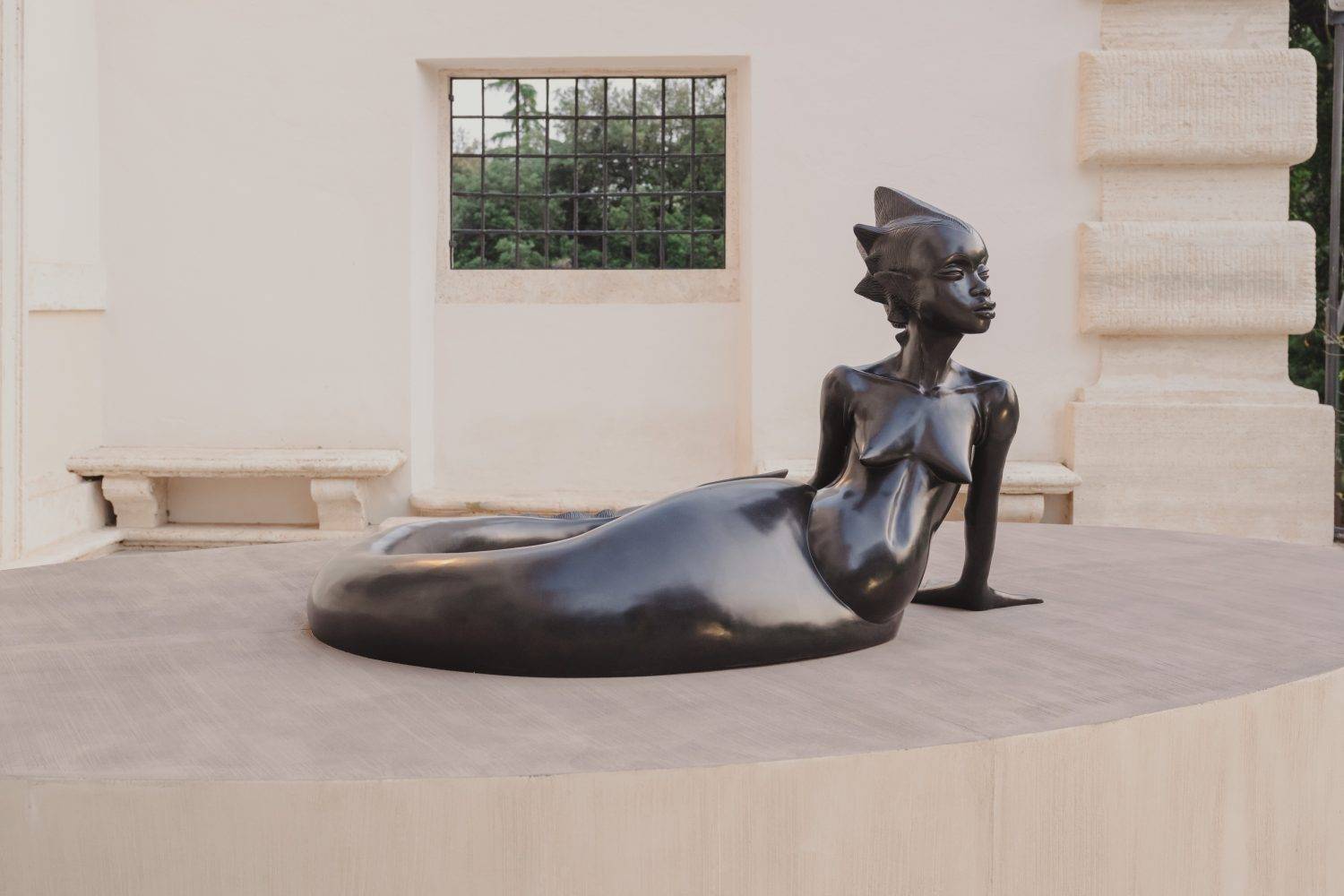
From Matisse to Picasso, African art has inspired entire generations of Western artists. In your opinion, does that influence still hold its power today?
Wangechi Mutu:
Since the dawn of time, African art has inspired the West to rethink itself. The ancient Egyptians taught the Greeks, the Greeks the Romans, and so on. But it all begins there: in Africa. Art, science, poetry, music — everything has drawn from that land. Even today, despite everything, Africa is still a forge of ideas and coveted materials — often plundered.
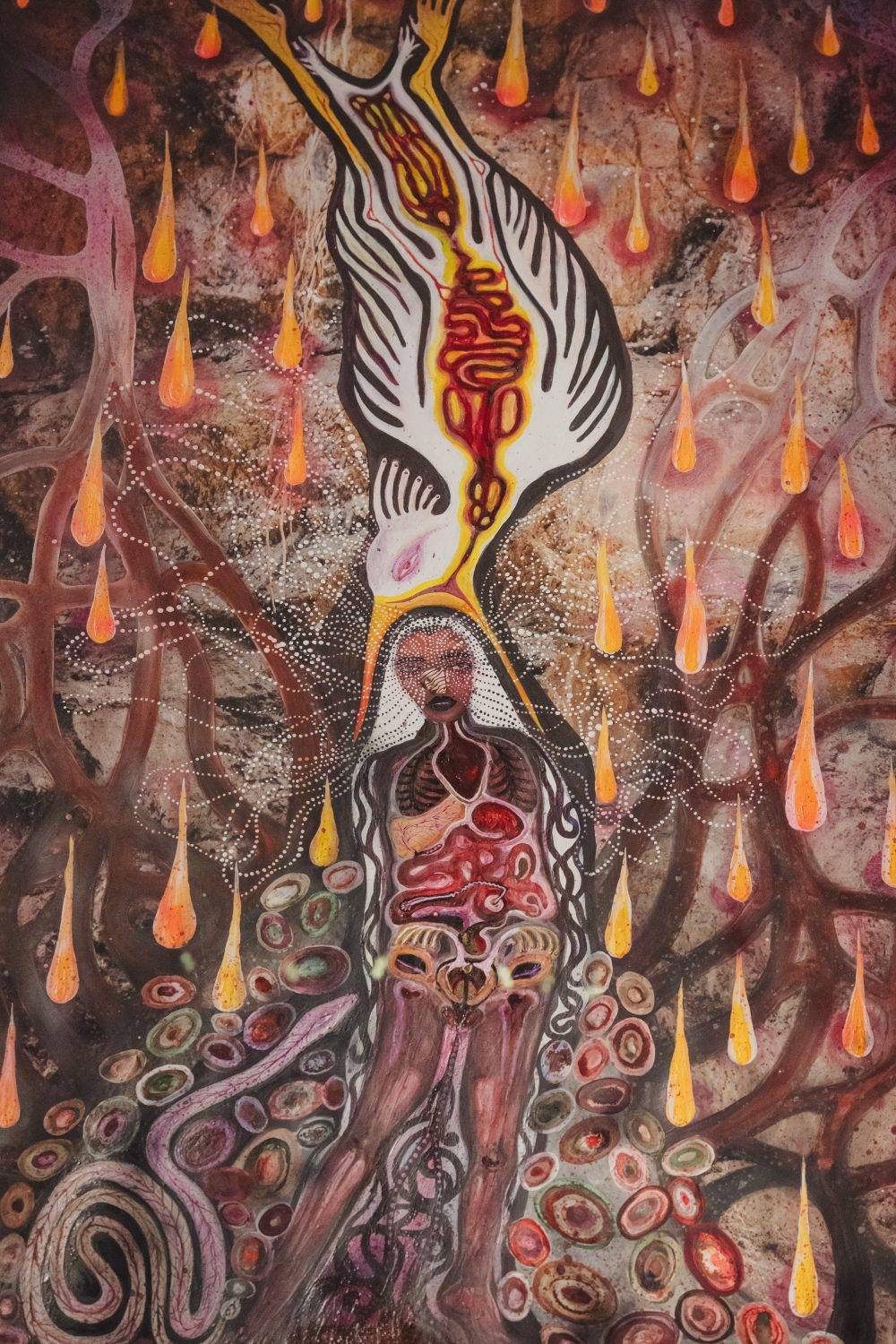
One last question, tied to metamorphosis — a core theme that recurs in your work. How is Wangechi Mutu transforming, as an artist, a woman, and a citizen of the world?
Wangechi Mutu:
I create in order to transform and grow. My studio is a cocoon, a place where I can isolate myself, reflect, shed my skin. It’s a continuous cycle: death, rebirth, beginning again. Always.
Photos: Niccolò Campita
Interview: Germano D’Acquisto


