


Urs Fischer
Routine kills me: I need different interests to keep my practice alive
“For me, art is not like a song on the radio that gives you an instant thrill: it’s something that enters the mind slowly”
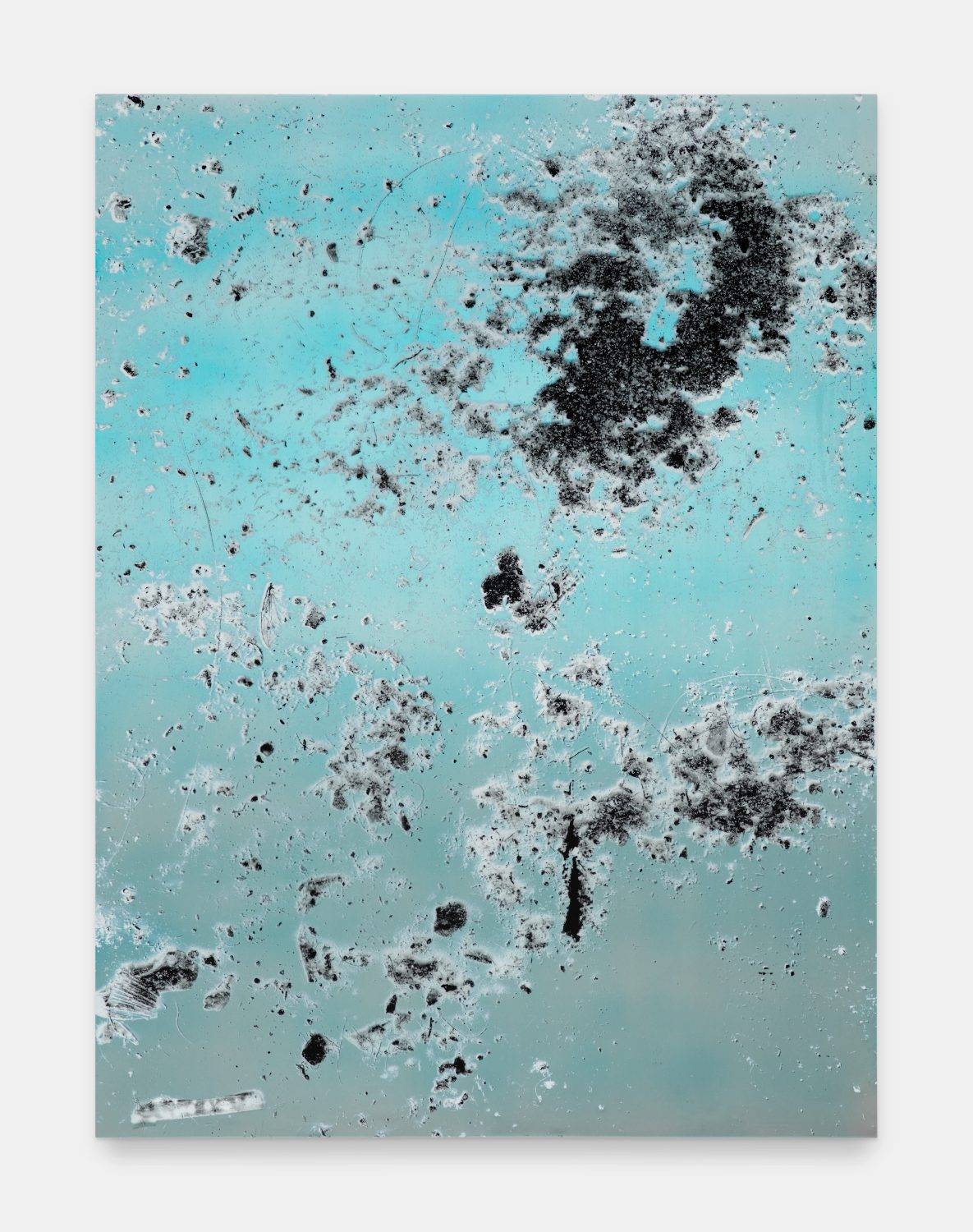
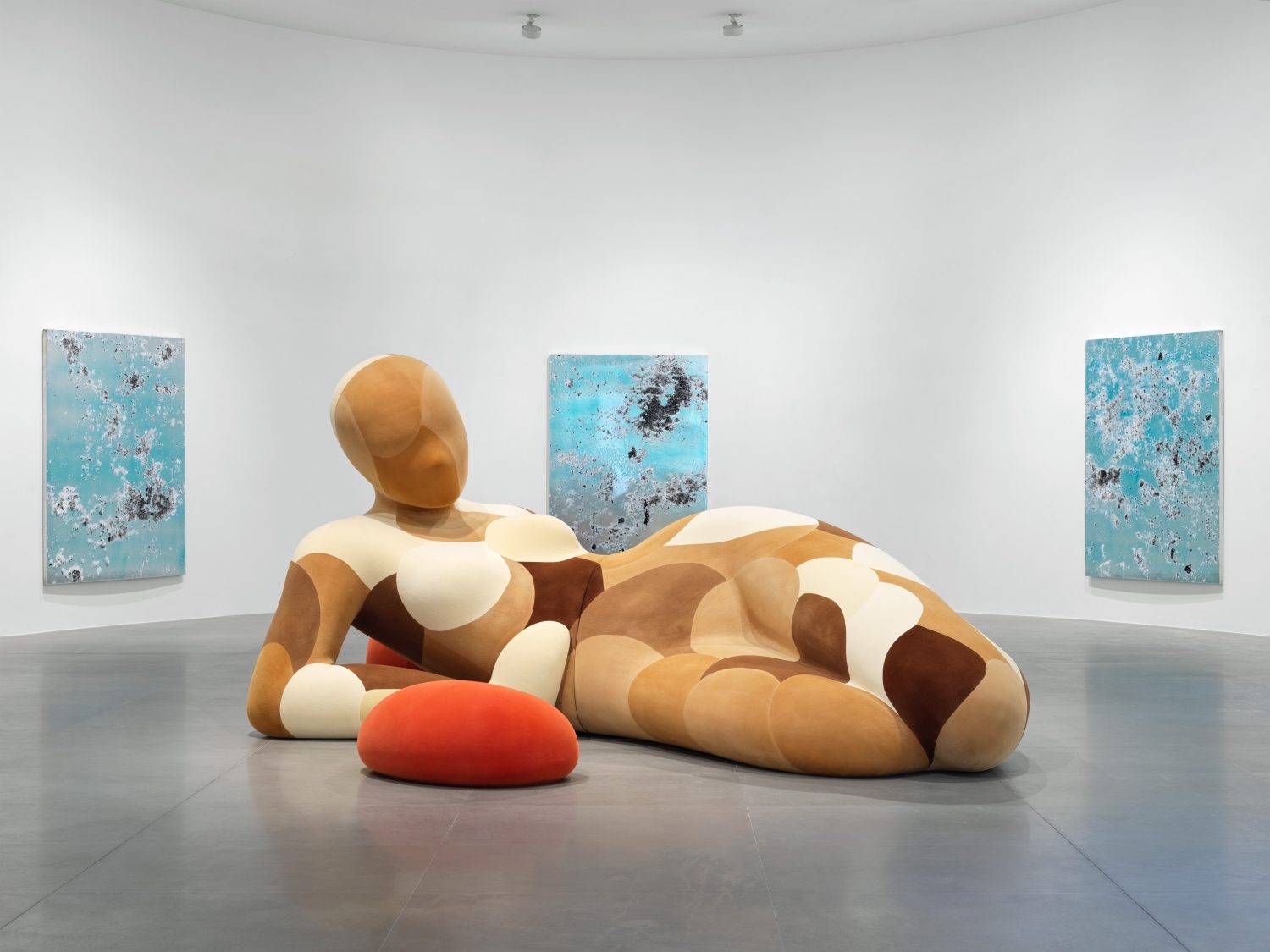
At Gagosian Rome, After Nature unfolds as a suspended world by Urs Fischer: eight new aluminum paintings coated in dust, a soft sculpture that invites you to lie down, and a video installation that returns your image—with a five-second delay. Stepping into this exhibition feels like entering a reality that bends time, stretches space, and transforms familiar objects and figures into unexpected visions. The dust panels shimmer like fallen stars in an imaginary desert, each grain carrying its own story, its own slow heartbeat that demands attention. And as visitors move between the gallery and Villa Medici—where, from September 18 to November 22, 2025, Dance, Fischer’s skeletal sculpture, engages in dialogue with Canova—the artist’s poetics emerge: respectful yet irreverent, slow yet powerful, capable of shifting perception, making the viewer pause, making art breathe. We met the Swiss artist to talk about discipline, skeletons, and suspended time, discovering that for him art is not about explaining everything, but about entering the mind slowly, slipping into thoughts, and lingering—long after you’ve left it behind…
What message do you want to convey through your works?
No, I never really think in terms of a message. If anything, I think in terms of discipline: if I can, I try to focus on a single theme in a work, not five. Because when you overload it with too many things, in the end none of them really communicate. For me, art is not like a song on the radio that gives you an instant thrill; it’s something that enters the mind slowly, and sometimes it lingers because of the context in which you saw it. Think about when you come across a painting in a friend’s house: at first it doesn’t convince you, but after a few days you almost start talking to it, forming a kind of bond with that canvas.
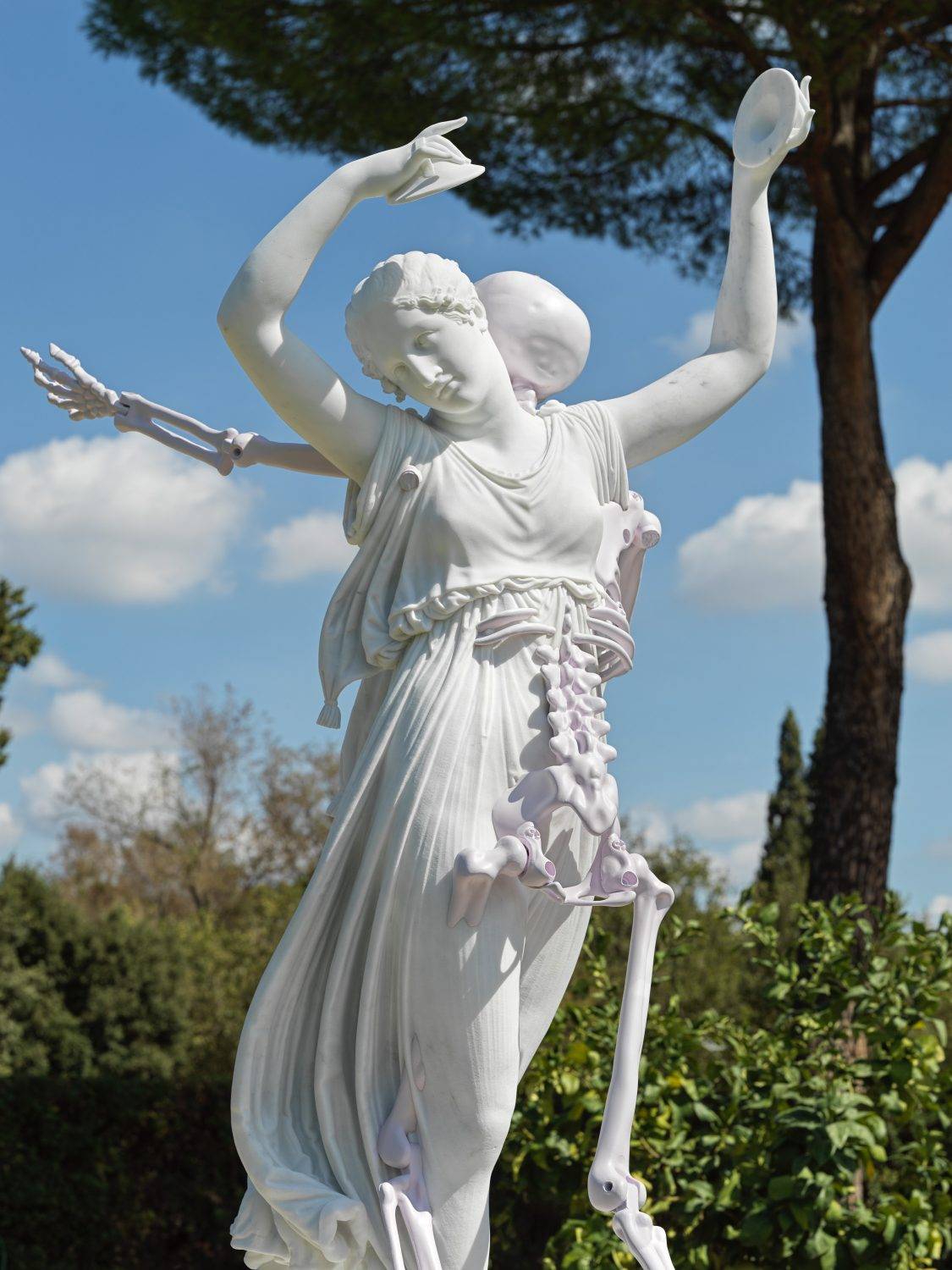
The sculpture Dance is on view at Villa Medici and engages in a dialogue with Canova. And yet, the central figure is a skeleton…
I’ve been working with skeletons for about twenty-five years. They appeared almost by chance: one day I started sculpting them, and since then—even if I set them aside from time to time—they keep coming back. As in this case. I tried to integrate the skeleton without compromising the integrity of Canova’s work. The two figures intertwine, but from the front the Canova remains intact; I let it be what it is. My intervention comes in from the side, or from behind. It’s an added presence, but not an invasive one.
The composition actually works precisely because of this encounter, this collision…
Exactly. I also wanted to respect another aspect: not all sculptures are meant to be viewed from 360 degrees—some clearly have a front and a back. And here I tried to follow that logic, playing with the idea of a spatial vision, but always with a sense of discretion.
The layered meaning of some of your works can be read as a form of resistance against today’s world, which seems to demand only clear and definite answers. Would you agree?
Can I turn the question around? Isn’t the insistence on having clear answers at all costs itself a form of resistance? There are so many different ways of seeing things. I think that, as an artist — but this applies to many colleagues and friends as well — you come to realize this over time. Some artistic practices are very strong, but also very defined, univocal. They have a clear, precise vision. But I’ve never thought that way, not even as a kid. And I still don’t. I allow myself to work with whatever interests me, whatever that might be. From the outside, it might seem complicated — and I don’t even know if it’s the most sensible choice — but it reflects my nature. I have different interests, and I couldn’t imagine being in the studio every day doing the same thing over and over. I truly love Giorgio Morandi, but that extreme concentration would drive me crazy. That hyper-focus, yes, it would push me over the edge.
To close with a classic question: what are your future projects?
I’ve started working a bit with furniture. In Rome, for example, the central sculpture is a sofa. I approach it lightly, and it’s fun. Over the past few months, I’ve really immersed myself in this new exploration.
Text: Germano D’Acquisto
Portraits: Ayka Lux
Intallation views: courtesy Urs Fischer e Gagosian Gallery Rome


