


Apolonia Sokol
Figurative painter and committed artist
“We always paint the people we love and the people around us, who inspire us.“
Apolonia Sokol is a Franco-Polish painter whose work focuses on the representation of bodies that are often missing from traditional art history. Trained at the École nationale supérieure des Beaux-Arts in Paris and influenced by her time at the Cooper Union in New York, she has developed an expressive figurative style that highlights plural and marginalised identities. Her work, nourished by social and feminist reflections, questions the norms of visibility and our relationship to others.
Alongside her artistic career, a major documentary film has been made about her: “Apolonia, Apolonia” (2022), directed by Danish filmmaker Léa Glob. Filmed over thirteen years – from Sokol’s adolescence to her first exhibitions, including her residency at the Villa Médicis – the film features her in her own role, capturing her doubts, her strength, and her relationship with painting and the world. On the occasion of the ‘Copistes’ exhibition at the Centre Pompidou Metz, Apolonia Sokol tells us more about her work and her inspirations.
On Instagram, you introduce yourself as ‘Apolonia painteresse’, a strange Anglicism. Can you explain this choice in a few words?
Apolonia Sokol :
Is that an Anglicism? Perhaps it is, but it’s actually just French… and feminine in French. It’s not really a statement! It just happened naturally, as I speak several languages. I’m based in France, but I grew up in Denmark and I’m Polish. When I chose my handle, I didn’t necessarily focus on French. At the time when I opened my account, Instagram was much more popular in Los Angeles than in Paris. In France, everyone would say to me, “Why did you create an Instagram? What’s that?”
The film “Apolonia Apolonia” gave you a lot of exposure, didn’t it?
Apolonia Sokol :
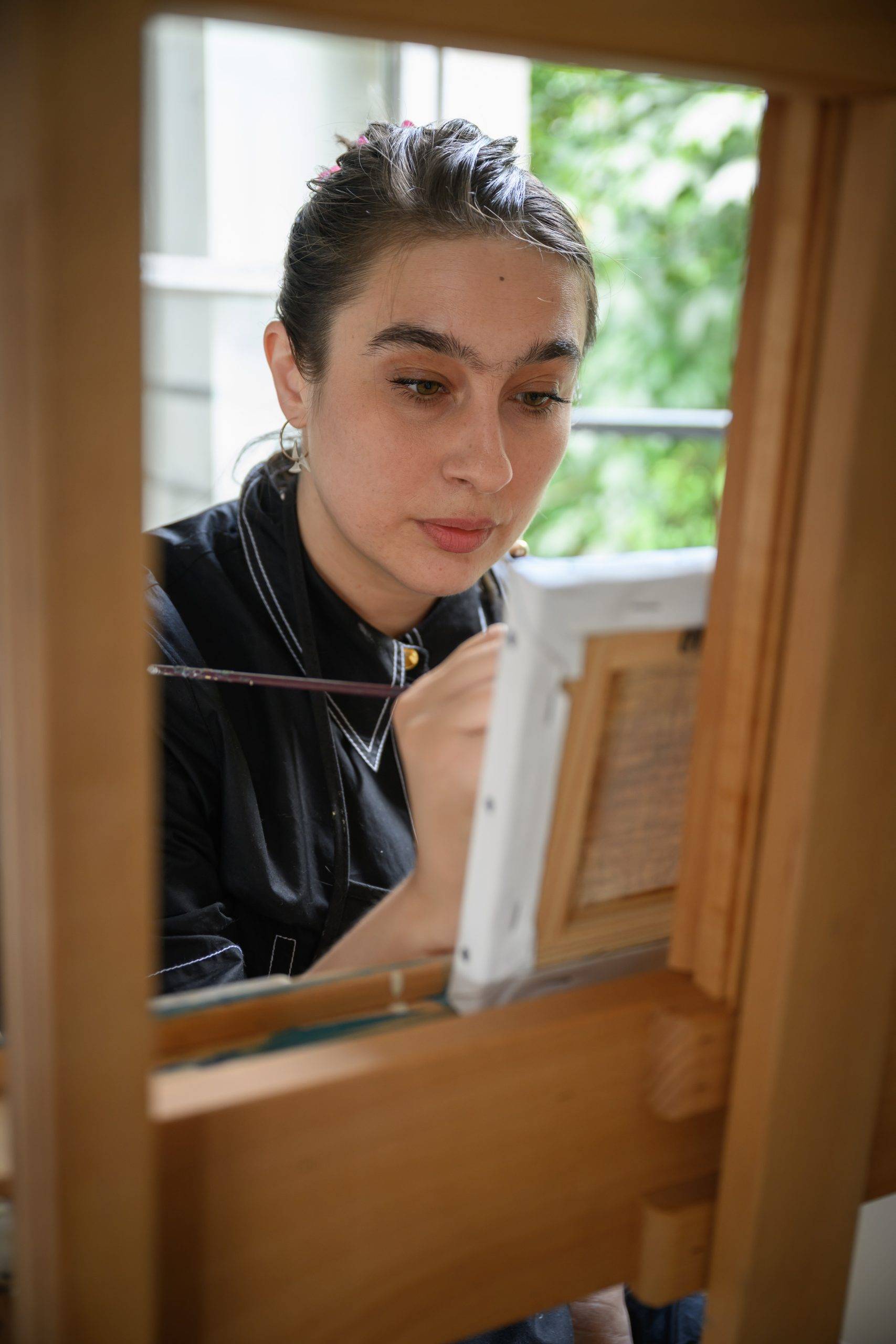
I was already quite well known in the community, but this was a real opportunity and a lot of people watched the film. I suddenly became visible in circles other than the elitist art world.
Has this changed the way people look at you?
Apolonia Sokol :
I think the film allowed people to appreciate me, to love me without prejudice. I find it strange… Well, it depends on the country. In France, for example, there are a lot of prejudices, and it can be very difficult to get into certain circles. This film was made with so much love and compassion that, in the end, the people who have seen it genuinely started liking me.
Has this changed the way critics view your work?
Apolonia Sokol :
I was already in this field long before the film came out. My career was already well under way, at the Villa Médicis too… I think that professionals are still demanding; they need to be convinced by my paintings, not just by some movie.
In the movie, we can see you at work and discover the ecosystem that fuels your art. The relationship with others seems fundamental to you, as your paintings are populated by figures. In what way are narrative and figuration essential to you?
Apolonia Sokol :
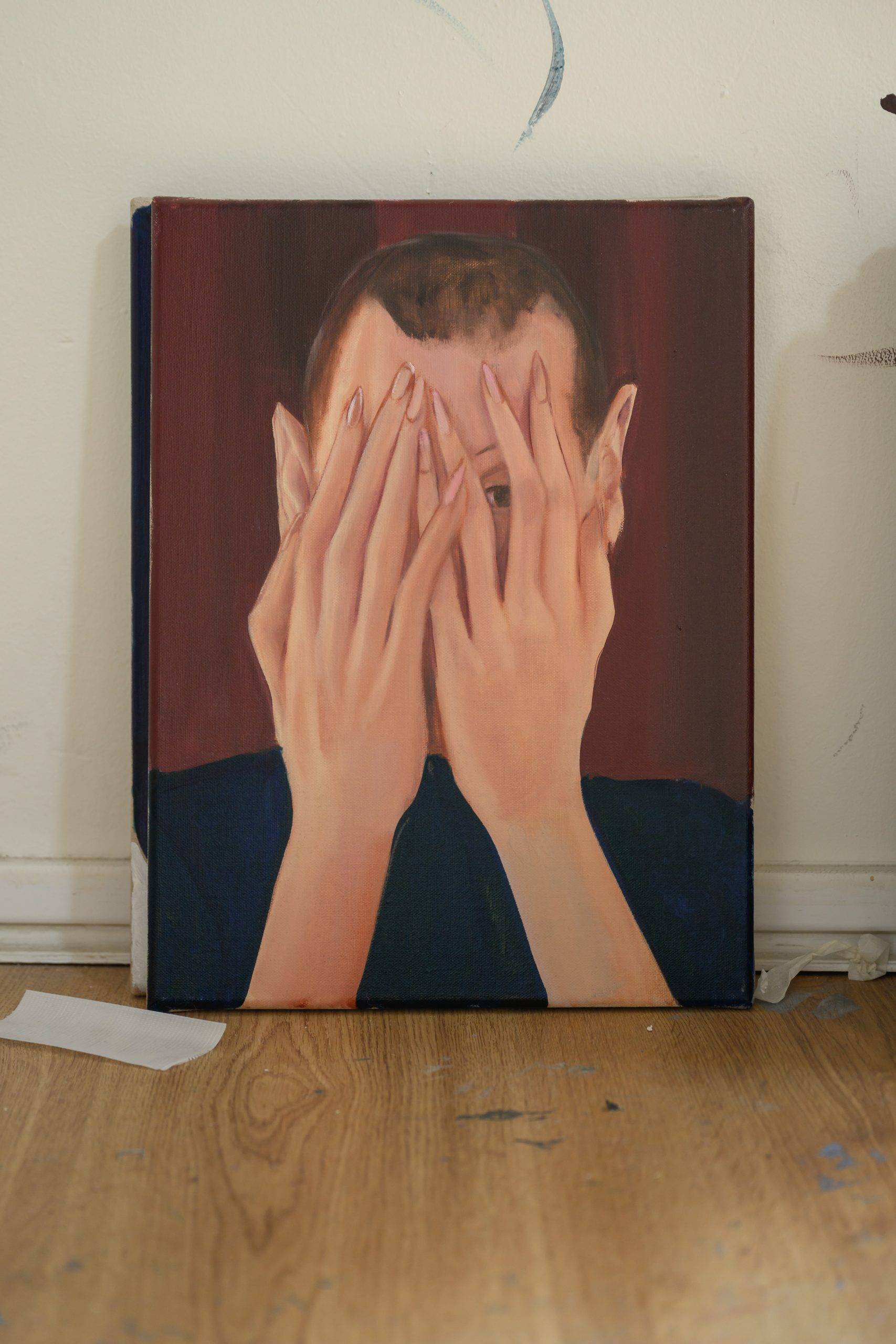
I think it’s the same for all figurative painters, we always paint those closest to us. You see, Matisse painted his daughter, Picasso, the women he mistreated. Bonnard painted his wife Marthe all her life – she took a lot of baths for her asthma – and he called his paintings ‘Le Bain’ or ‘La Toilette’. Personally, I’d rather talk about Marthe… or rather, the person I’m going to paint. I think we always paint the people we love and the people around us, who inspire us.
You have been invited by the Centre Pompidou Metz and the Louvre to be a copyist. What is the title of the Centre Pompidou exhibition that opened this month? Which works inspired you?
Apolonia Sokol :
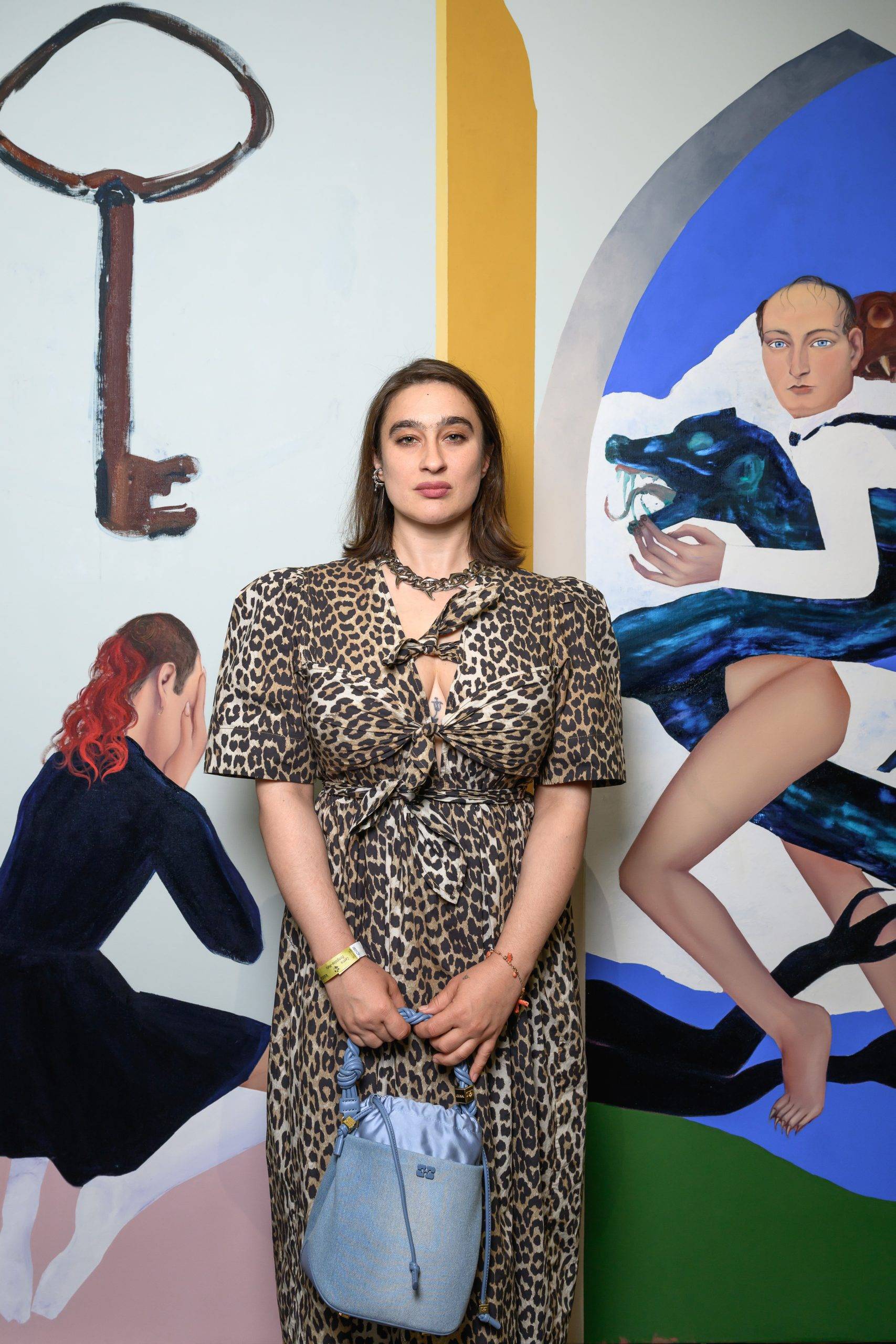
The exhibition is called Copiste! I decided to use a mysterious piece that painters know well by Sassetta. You might walk right past it without noticing it, unless you’re really into medieval painting. The Louvre has a number of panels from an altarpiece by the painter Stefano di Giovanni. The two panels I chose tell the story of a saint who frees the poor from prison by miraculously cutting a hole in a prison wall. The first panel shows the poor escaping from the prison by climbing out of the wall. On the back, the story continues, with the wise men discussing the situation and, in the background, the soul of the miser is carried away by the devil. And it’s really a naked miser, a naked rich man riding a demon through the sky.

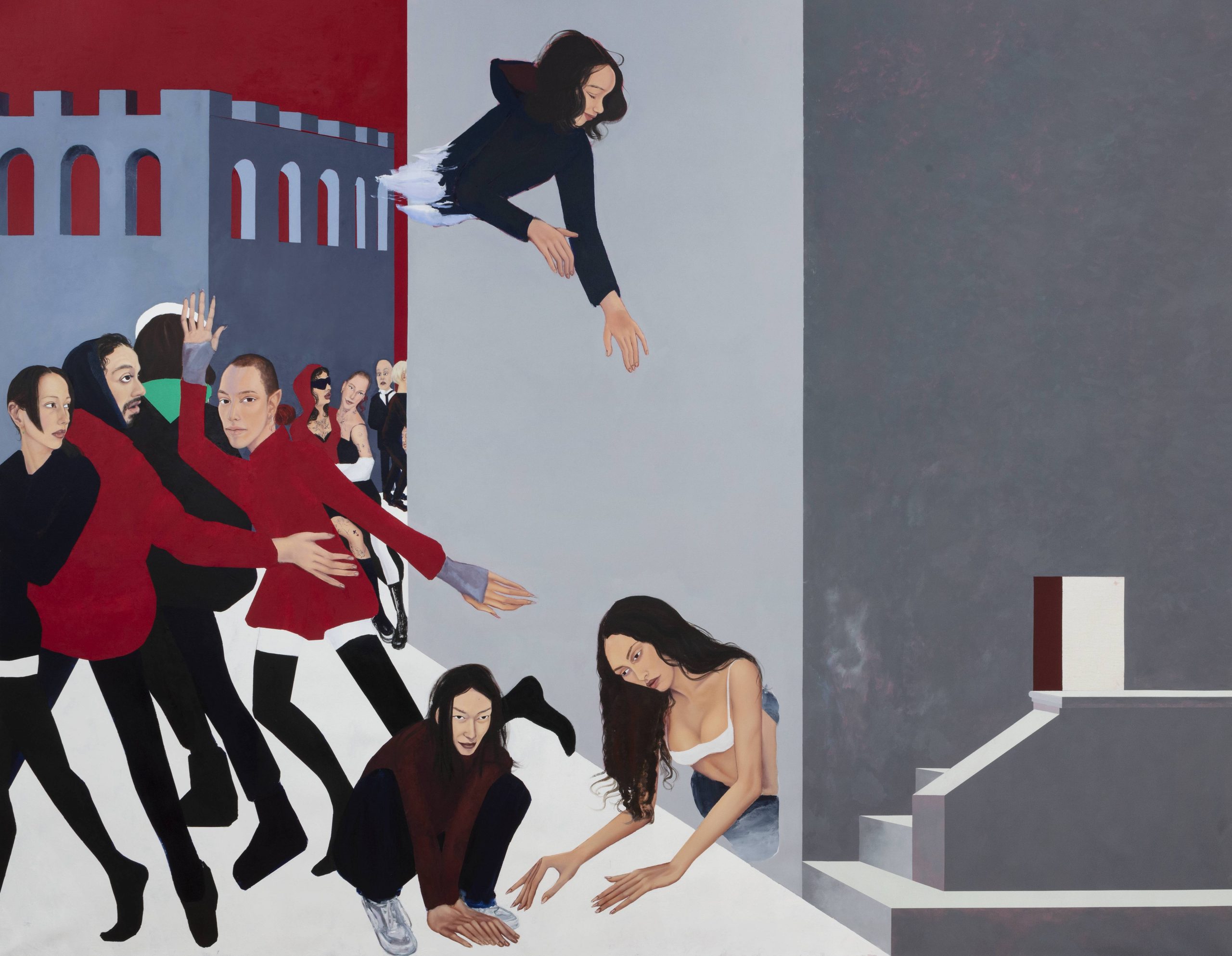
This diptych raises the question of debt. They’re locked behind this wall because they’re in debt, but when you build walls, who benefits from it? Who is indebted to whom?
Apolonia Sokol :
Because we also tend to loot and build walls afterwards to protect our spoils? It raises the question of ownership too, and it’s a very relevant one nowadays. Finally, for the miser, I chose to paint Napoleon in a white collar, which I found hilarious, because Napoleon is a symbol of imperialism through and through, and he can embody any patriarch. Strangely enough, he’s quite worshipped today; we often pay tribute to him even though he was a dictator.
Why did you choose a double-sided diptych?
Apolonia Sokol :
It’s double-sided, just like debt is. The painting stands alone, erected like a wall, almost emerging from the ground. The painting itself is a wall. And all walls need a door, just as all wealth implies poverty.
Can you tell us about the characters and symbols in these paintings?
Apolonia Sokol :
I’ve chosen to include those closest to me. The person who comes out of the hole, embodying the poor ragged woman, is Raya Martigny. She is a model for Mugler and Jean-Paul Gaultier, a magnificent queer woman. There’s also the painter Matthias Garcia who is a non-binary person, well actually gender-fluid, we don’t really know, the principle of fluidity being change. There’s also Noah Umur Kanber, a trans artist with whom I’m preparing a duo show in Copenhagen. There are several possible readings of my painting.

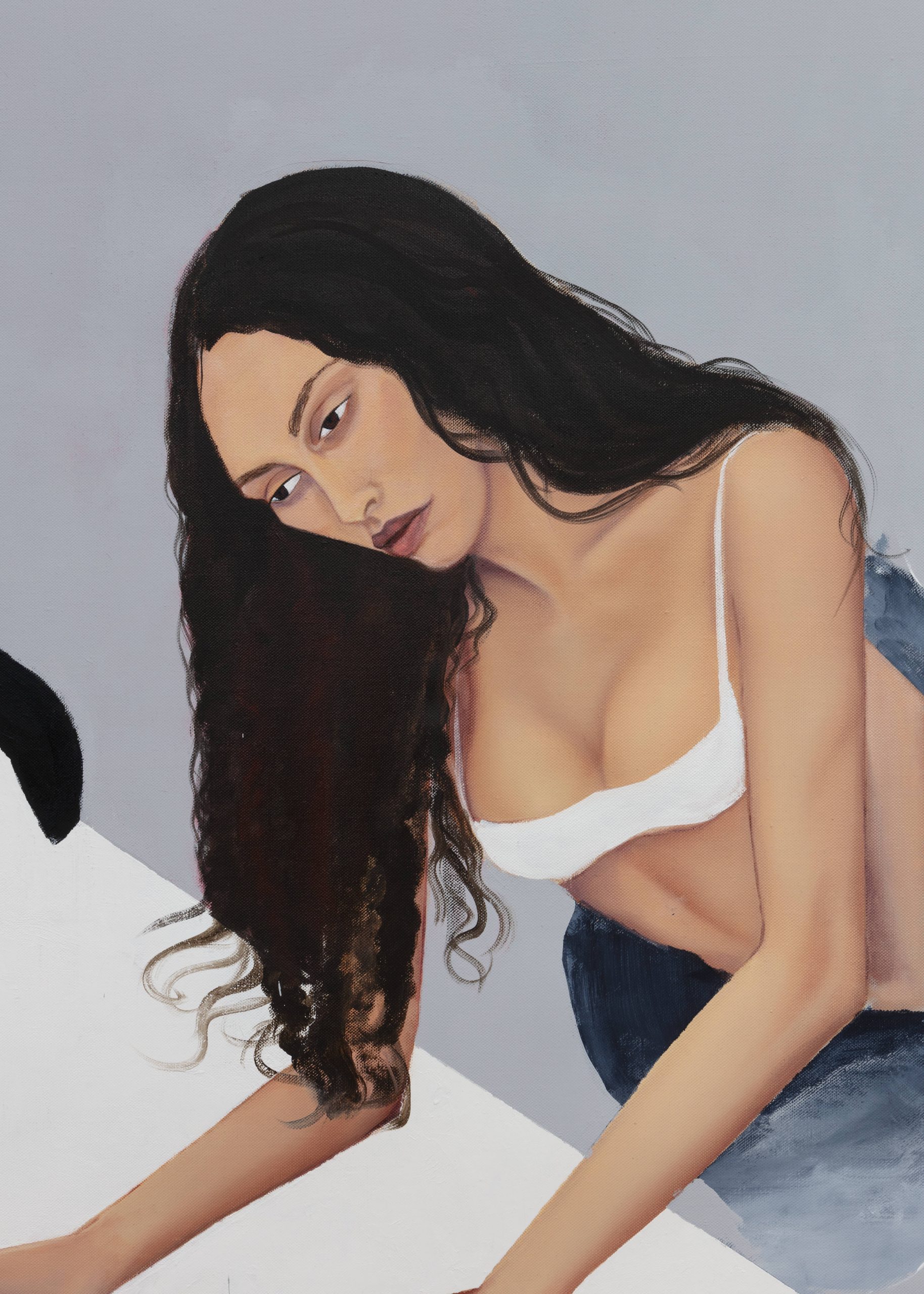
You talk about it with your painter’s tools, in a symbolic way and by painting people close to you or icons.
Apolonia Sokol :
That’s it, but I also chose to paint Napoleon and not my father, although I could do that too.
Interview by Michaël Huard
Photo credits: Michaël Huard and Courtesy THE PILL® photo Tanguy Beurdeley


