


Claudia Zanella
Writing is like building a cast of characters and performing them: it’s acting while sitting down
«If you’re a good actor, when you write you can perform the lines and understand whether that sentence truly belongs to them»
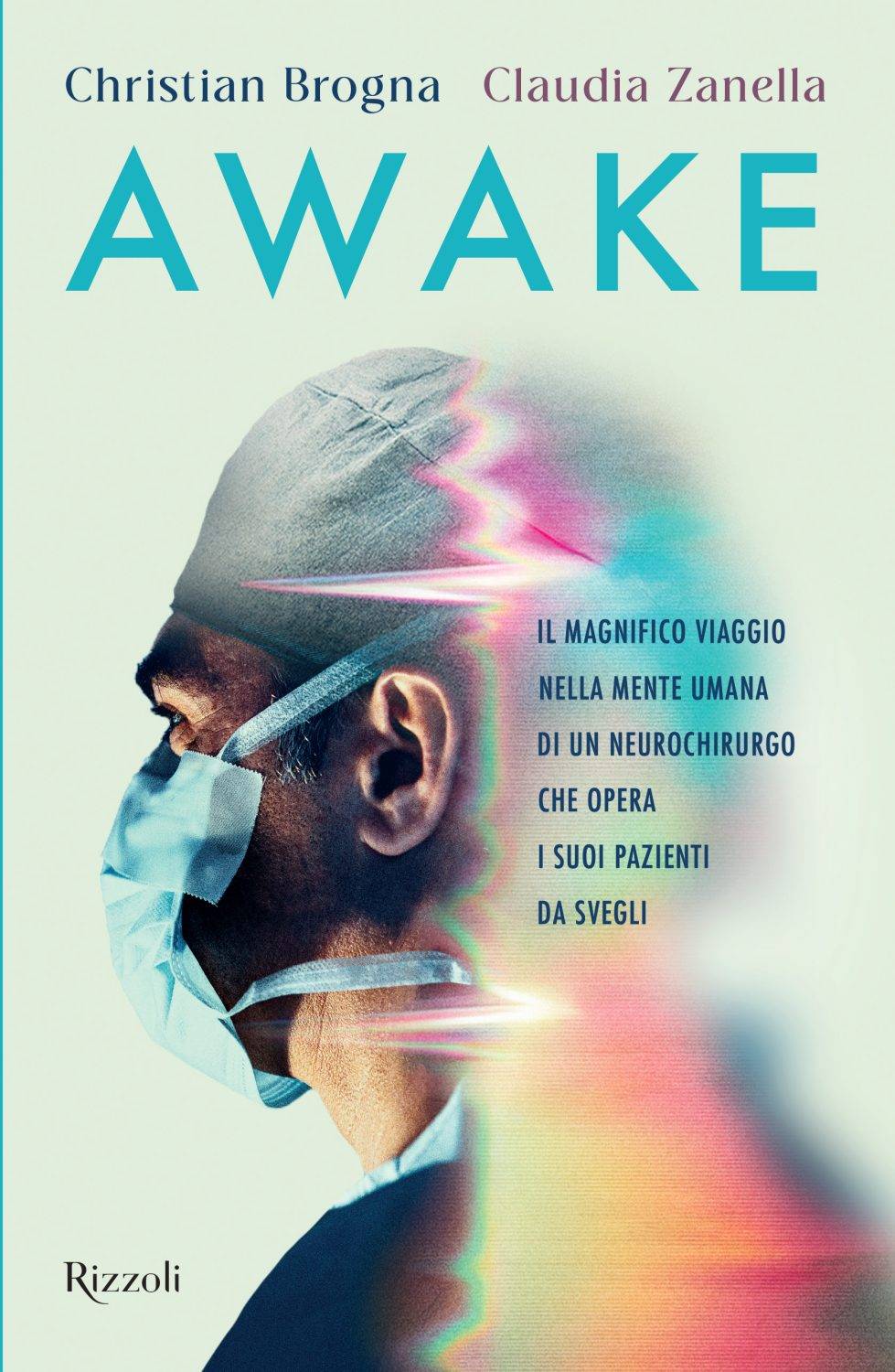
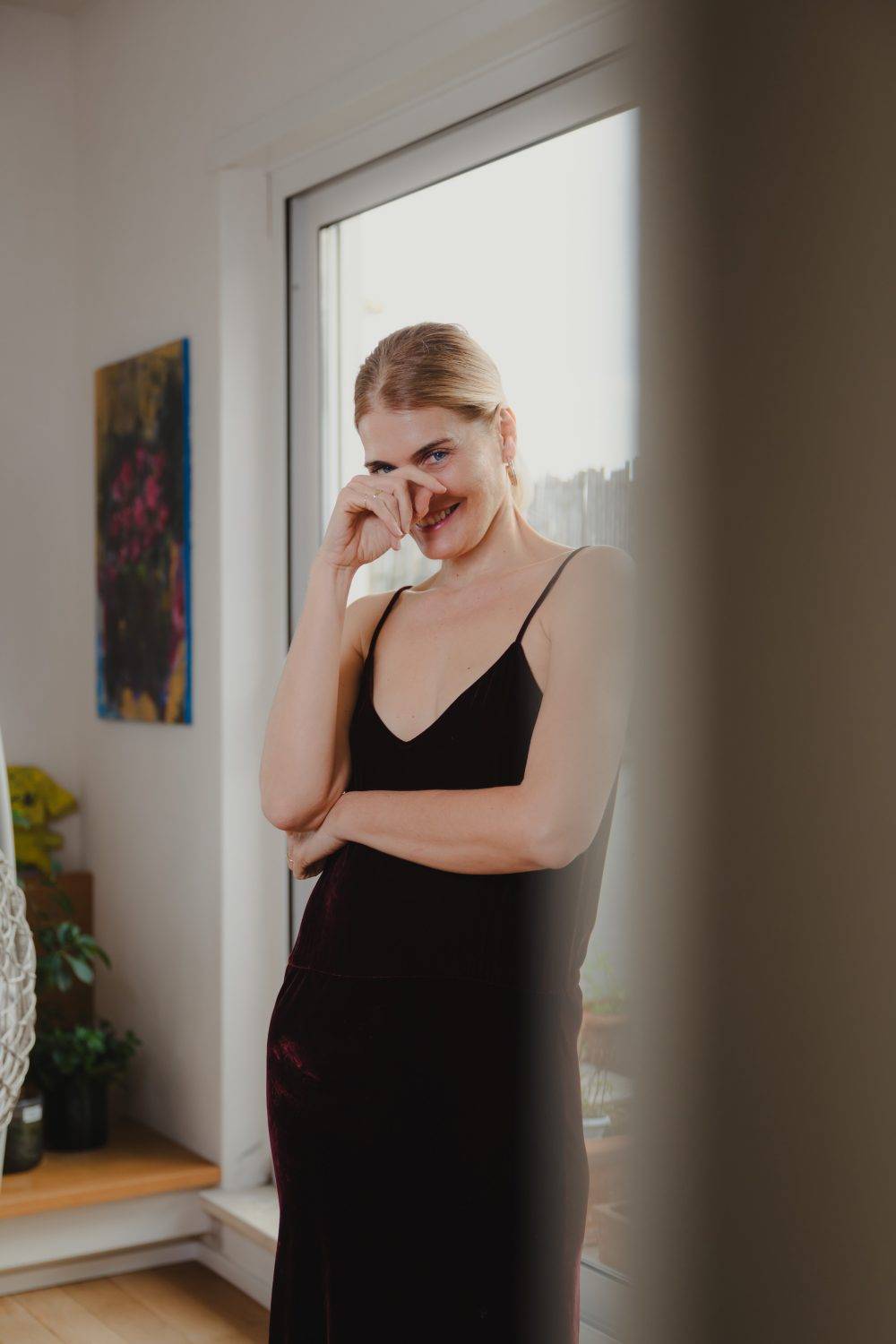
Claudia Zanella is one of those figures who resist easy categorisation: she always seems to be chasing—often catching up with—an existence that runs parallel to the previous one. There is Claudia of the film sets, raised among cameras and directors who need no introduction—Rubini, Salvatores, Bellocchio—and then there is another Claudia, the one who has emerged over recent years: the writer. First with Tu e nessun’altra (Rizzoli, 2015), an intimate, sharply observed novel; then with Meglio un giorno da vegana (Sperling & Kupfer, 2017), a memoir that is only light on the surface; and finally with Awake, the book that took her somewhere she never imagined she would end up: an operating theatre.
To tell the story of Christian Brogna and awake surgery—brain surgery performed while the patient remains conscious—Zanella didn’t observe from a distance. She put on a surgical gown and, for more than a year, breathed the same air as the medical team, like an actress preparing for an impossible role. She watched hands, silences, fears that no scalpel can stitch back together. That is how Awake becomes not just a work of popular science, but an immersion—an act of inhabiting stories until they begin to vibrate. And perhaps this is the thread that ties all her lives together—actress, writer, witness to a fragile boundary between identity and courage. Claudia Zanella always enters stories from the inside. Even when they are frightening.
How did the idea for Awake, the book you co-wrote with Christian Brogna, come about?
CLAUDIA ZANELLA
Christian and I have known each other for almost twenty years. Back then he was finishing medical school and already wanted to become a neurosurgeon. Even then he used to say something that sounded completely absurd to us—his dream was to operate on patients while they were awake. I was working as an actress. But that story stuck with me. Then he left: Istanbul, Marseille, other hospitals, other cities. I moved house, lost his number, we lost touch. And yet, for eighteen years, I kept thinking about that guy who dreamed of operating on the brain with patients awake. I wondered whether he had made it, whether that “crazy” dream had become reality.
…And in the end, had it?
CLAUDIA ZANELLA
Yes. One day I read about a saxophonist who had undergone brain surgery while playing in the operating room. I put the pieces together, realised it was him, managed to track him down. We met for a coffee: we hugged, caught up on our lives, and he told me about that surgery. At that moment something became very clear to me: this story had to be told. Not just because it’s spectacular from a media point of view, but because there is a technique that allows surgeons to operate while preserving the patient’s identity as much as possible. Christian saw people go into surgery with a brain lesion and come out without the lesion—but with cognitive, motor, relational damage. And he kept asking himself: “Is it possible to do better? Is it possible for them to come out the same as they went in?” When I met him again, I felt that a dream from twenty years earlier had come true. And I felt a responsibility: this has to be explained to the world. The way I knew how to do that was through what I had studied at the Centro Sperimentale di Cinematografia: cinematic, immersive writing, from the protagonist’s point of view. That’s why I always say that for Awake I did more of an actress’s job than a writer’s. For over a year I was in the operating room with him, watching how he moved his hands, how he looked at patients, how he reassured them. At home I tried to “redo” him, like preparing a role. I tried to become him, to get inside his head, in order to truly write in his voice.
How much do the actress and the writer inside you talk to each other? Does one influence the other?
CLAUDIA ZANELLA
Enormously. Many years ago, on the set of Tutti al mare, I was talking to Vincenzo Cerami and told him, all excited, “I’ve started writing too.” He replied with a sentence I’ve never forgotten: “You can only write if you’re a good actress.” He explained it like this: if you’re a good actor, when you write you can perform the lines, inhabit the character, understand whether that sentence really belongs to them. I’ve always worked this way. In my first novel, Tu e nessun’altra, when I was writing the dialogues between the two cousins, I would embody each of them. Sometimes I’d stop and think: “No, she wouldn’t say that—the other one would.” And I’d move the line. It’s acting applied to writing. With Awake it was the same, but multiplied by ten. I spent a year in the operating room observing the team—the neuropsychologist, the anaesthetist, the neurophysiologist, the technicians. When I had to write, say, a scene from the anaesthetist’s point of view, at home I would try to repeat her gestures, imagine her way of thinking in that moment, her tone of voice. It’s like building a cast of characters and performing them one by one before putting them on the page. That’s why I say that, for me, writing is acting while sitting down.
Is there a character you played in film or theatre who taught you something about vulnerability and helped you later while writing Awake?
CLAUDIA ZANELLA
Yes—Ada Cantini, the character I played in Quo Vadis, Baby? by Gabriele Salvatores. She’s a young woman full of desire who leaves Bologna to become an actress but never quite makes it. She auditions, gets rejected, remains suspended. She’s incredibly fragile, full of emotional highs and lows. She stayed with me because I often thought, “What if I had been the one who didn’t make it?” I was lucky: I left the Centro Sperimentale and shot a film a month later. But I saw many incredibly talented classmates go back to their hometowns and do other jobs. Ada taught me to look at vulnerability without judging it, to listen to failure, frustration, the fear of not being enough. All things that come back with immense force in an operating room, where someone’s life and identity are at stake.
Looking at your career as an actress and as a writer, was there a moment when you truly felt ‘in the right place’?
CLAUDIA ZANELLA
As an actress, definitely during Briciole, the film about anorexia by Ilaria Cirino Pomicino. It was my first leading role, just out of the Academy. I had an enormous hunger to work, to prove I could do it. On set, at that time, I felt very strongly: “This is my place.” As a writer, it was Tu e nessun’altra. It was a story I physically needed to tell, because it came from a real relationship with my cousin—an intense, almost obsessive bond of sisterhood and mutual salvation. That novel came from a real question: what happens if someone you love asks you to take care of the most precious thing they have? That was my way of working through that promise.
Is there a side passion, a place, an obsession or daily practice that feeds your creativity more than one might imagine?
CLAUDIA ZANELLA
Yes: SUP. Paddleboarding. It’s a real fixation. I love the sea and sailing. If I could, when I’m old I’d sell everything and live alone on a small sailboat, happily. I have a house at Circeo, on the cliffs. I go down, take my board, and stay in the water for hours, often alone. You’re standing on a board, with the waves, constantly searching for balance. There’s total silence, caves, small coves, the sea that sometimes looks like Ponza. It’s meditation in motion: you paddle, you think, sometimes you jump in the water, then climb back up. There’s also something almost “mythological” about it—it’s no coincidence that Homer had Ulysses stop right there, with the sorceress Circe. People say Circeo has a particular magnetism, and I feel it deeply. Every time I come back from the board, I write. Always. It’s as if that stretch of sea recharges me and sets the stories in motion again.
Interview: Germano D’Acquisto
Portraits: Niccolò Campita


