


A sense of unease is crucial for me — it’s perhaps the very point of what I do
«Beauty for its own sake doesn’t interest me. I’m always looking for tension, a crack, something that unsettles»
There’s always a subtle short circuit in Francesco Simeti’s work: enchantment and suspicion, beauty and menace, grace and ambiguity. His installations seduce the gaze like a gentle trompe-l’œil, only to reveal that beneath the decorative surface lies the disorder of the world. Born in Palermo in 1968, raised amid Sicily’s baroque light and the awareness that every image is a political act, Simeti has over time built a visual language that moves gracefully between art, design, and civic engagement. Today he lives and works in Brooklyn, yet his Sicilian roots continue to surface in his fascination with layering — of eras, materials, and histories — that runs through all of his work. Public art is his second nature: from mosaics in the subway stations of New York and Chicago to ongoing projects for the Los Angeles Metro, and permanent wall coverings in Italian spaces such as Officine Saffi in Milan and Casa Giglio in Turin. Simeti is an artist who inhabits places, listens to them, and transforms them, creating “mural landscapes” that seem to breathe alongside those who pass by. At the MAO in Turin, where we meet him, his installation Description Generale (A Historical Map of the Other) enters into dialogue with the museum’s collections, weaving together references to East and West, colonialism and visual memory. His wallpapers become aesthetic traps: they attract you with their beauty, then force you to truly look. As he likes to say, “decoration is the most refined form of provocation.” And looking at his work, it’s hard to disagree.
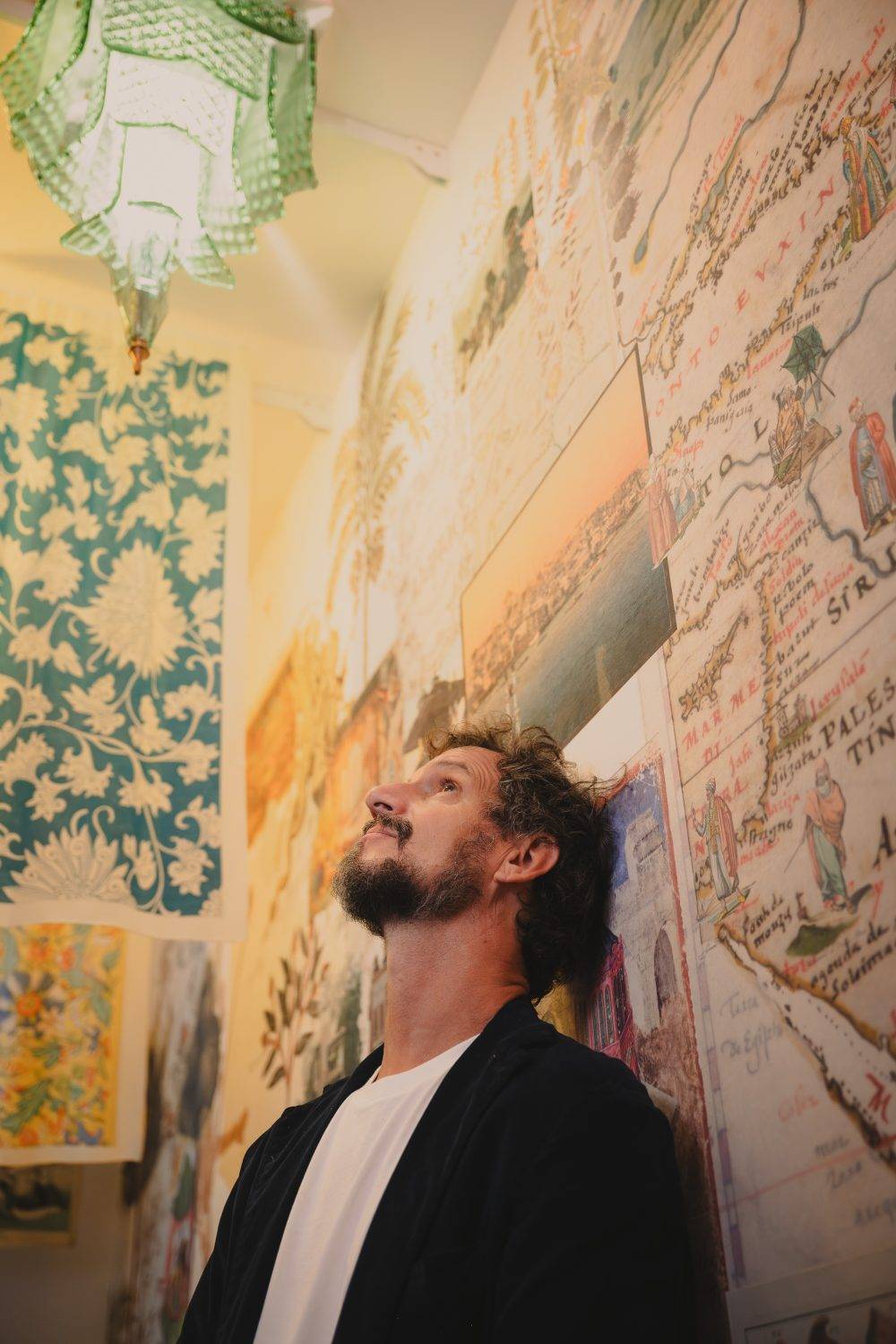
Three words to describe your philosophy?
FRANCESCO SIMETI
I’d say: site-specific, wonder, and slap.
Your works often start from archival images or pre-existing visual repertoires. What does it mean for you to reuse an image?
FRANCESCO SIMETI
It’s a way to exploit the familiarity of the image — to lower the viewer’s defenses. In the case of that “slap” I mentioned earlier, that’s exactly the idea: start from something recognizable, then disorient. I’m interested in creating wonder through unexpected associations, pairing images of different natures to generate a brief moment of confusion. And then there’s my obsession with archives: I’ve collected images forever, almost compulsively, constantly cataloguing and reorganizing them.
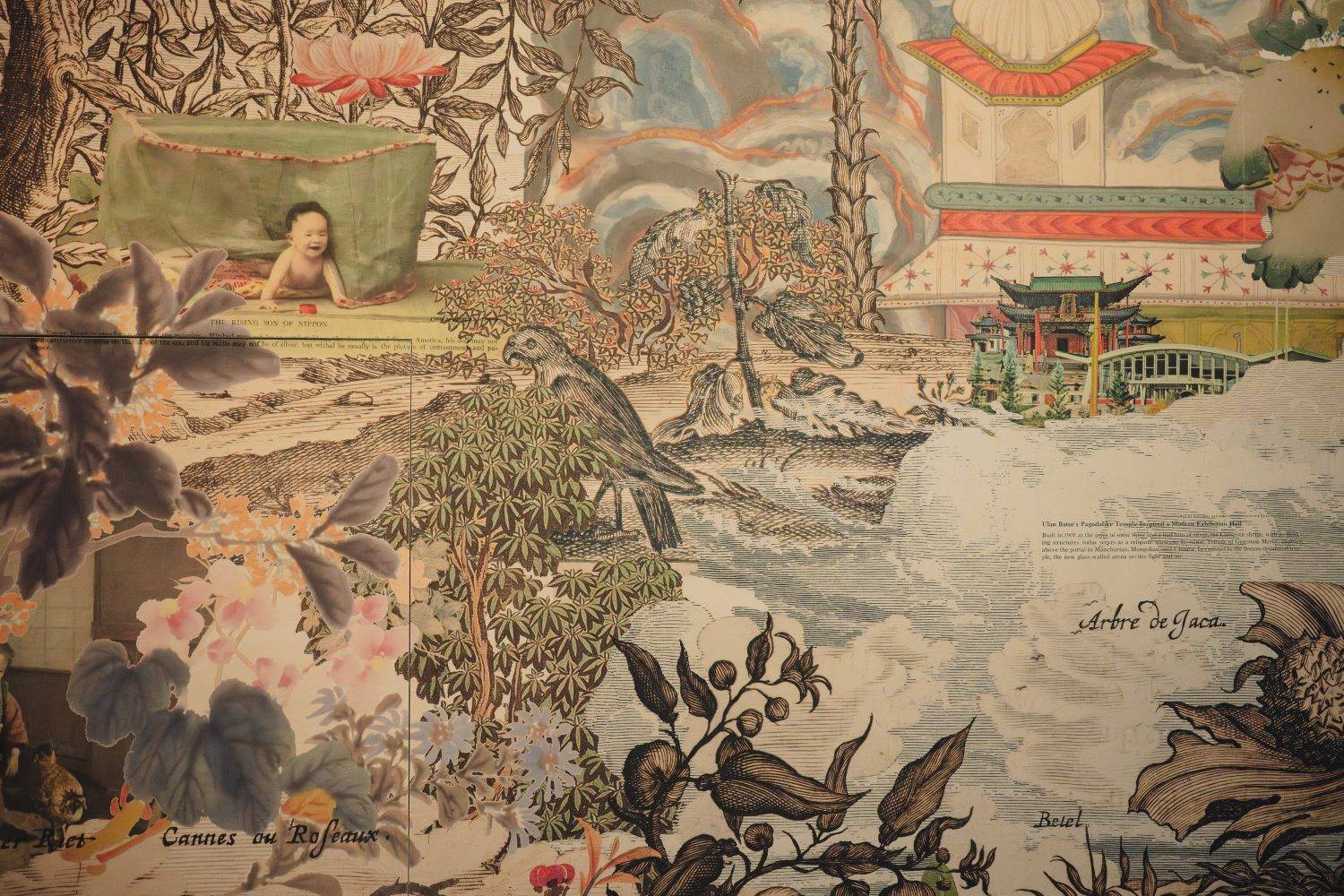
In much of your work there’s a delicate balance between aesthetic attraction and unease. Do you see that ambiguity as central to your poetics?
FRANCESCO SIMETI
Absolutely. Beauty for its own sake doesn’t interest me. I always look for tension, a crack, something that disturbs. Unease is essential — maybe even my main goal.
Nature and artifice seem to coexist in your work, as if there were a constant tension between what is organic and what is constructed. Is that a way to speak about our time?
FRANCESCO SIMETI
Yes, it’s a direct reflection of our era. We live in a collective madness where we’ve decided that nature is something “other” than us. That separation is what’s leading us to catastrophe. Believing ourselves to be outside of nature is devastating — and, honestly, rather presumptuous.
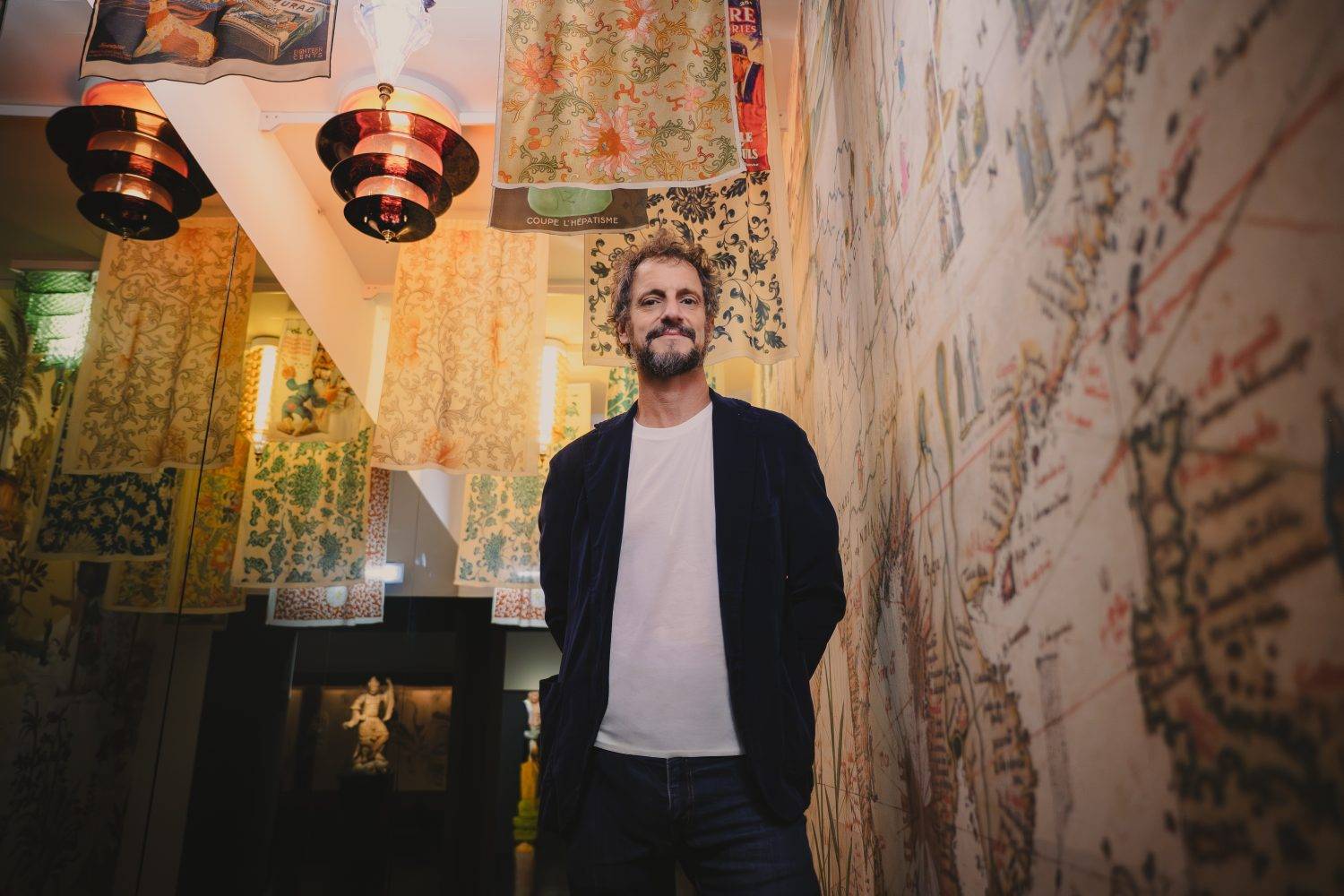
You’ve lived in New York for many years but maintain a strong connection with Italy. How does that dual gaze, American and European, affect your research?
FRANCESCO SIMETI
I was born into it. My mother is American, my father Sicilian. They met in 1961 when she was in Sicily volunteering with Danilo Dolci. I grew up in Palermo during the ’70s and ’80s, when the world wasn’t yet globalized. Having that dual gaze — that “Anglo-Saxon flaw,” as I call it — wasn’t common, and sometimes it was a burden. But it also shaped my entire perspective.
Is there a material, color, or form that feels particularly yours?
FRANCESCO SIMETI
In recent years, ceramics have become a sort of comfort zone, but I love challenging myself with materials I don’t yet know. Lately, I’ve started turning wood on a small lathe to create elements I can combine with ceramics. I’m also exploring natural resins and bioplastics — I’m curious about incorporating them into my work. And then there’s blue — a color I’ve always loved, even if I’m not sure how much it actually appears in my pieces.
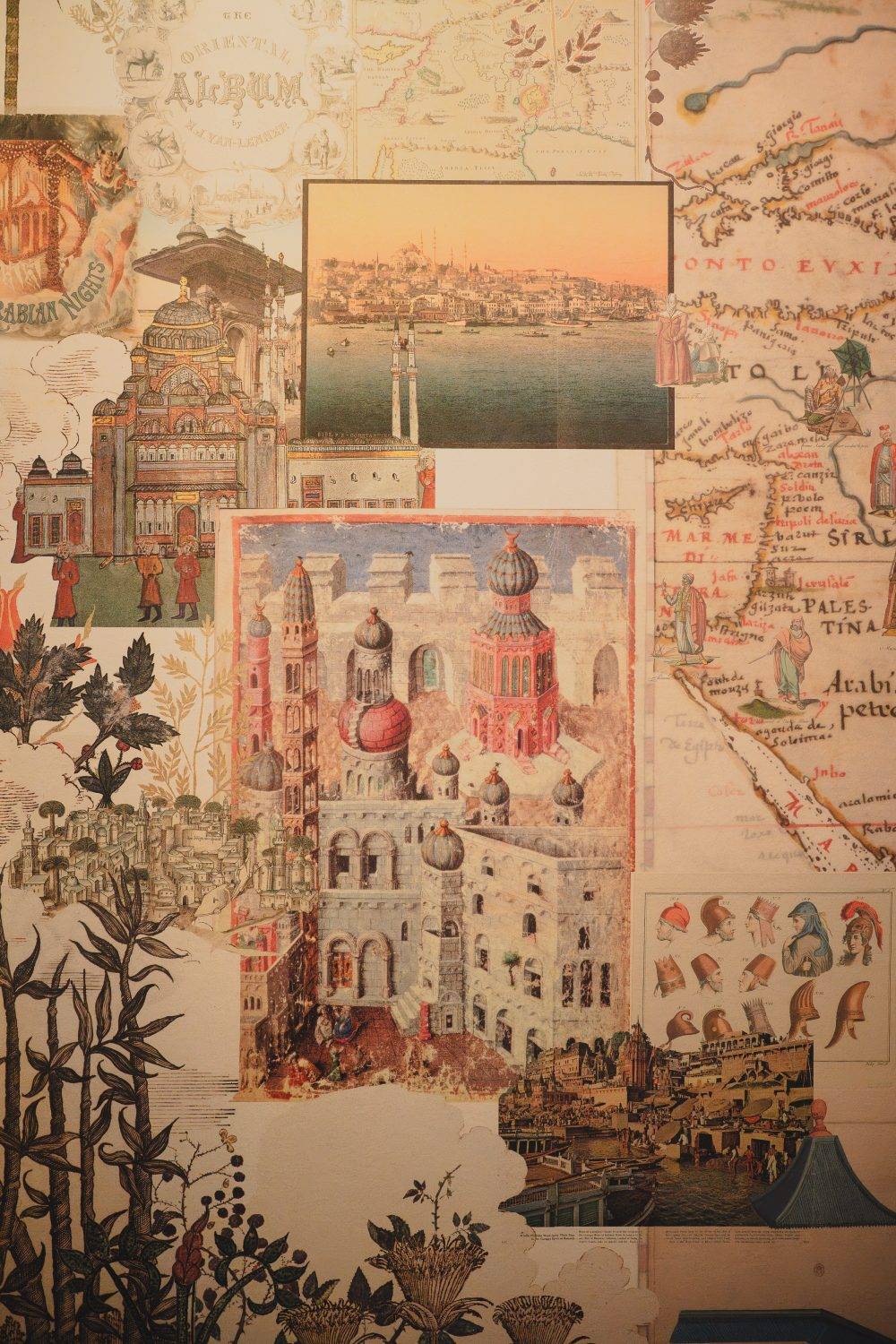
If you were to create a handbook to read our present time, what image would you put on the cover?
FRANCESCO SIMETI
Tough question. Maybe one of those geographic compendiums — an image where all the world’s physical geography — icebergs, deserts, rivers, mountains — is condensed into a single page. I’m fascinated by the idea of compressing the full complexity of reality into a limited space.
What does 2026 hold for you?
FRANCESCO SIMETI
In May, I’ll have a solo show at Galleria Minini in Milan. Then comes the second chapter of my collaboration with Officine Saffi, which will be presented during Milan Design Week. And finally, the inauguration of the artwork I’m creating for a new Los Angeles Metro station, built ahead of the 2028 Olympics.
Interview: Germano D’Acquisto
Portraits and installation views: Ludovica Arcero


