


Amélie Pichard
Welcome Home at Maison & Objet
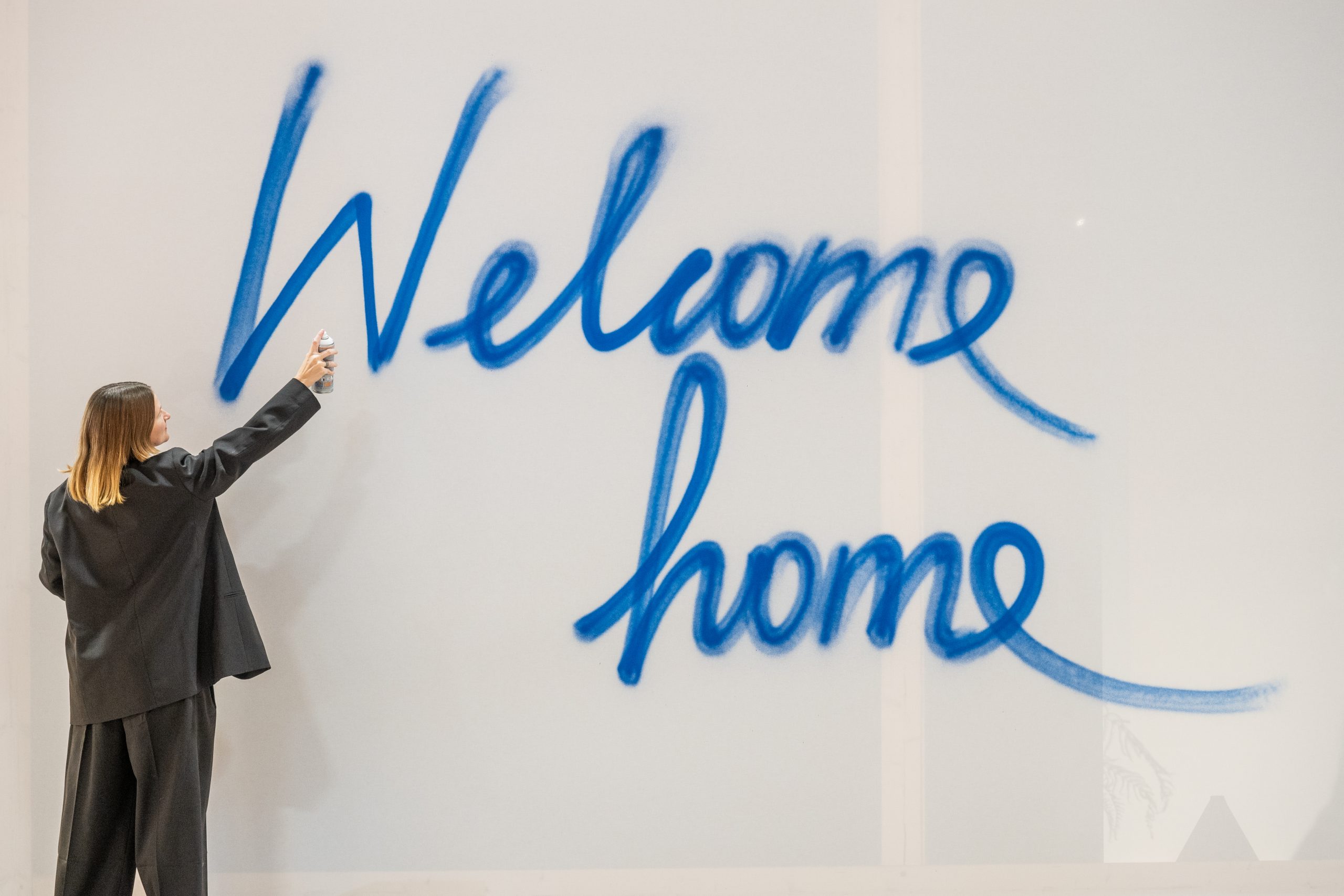
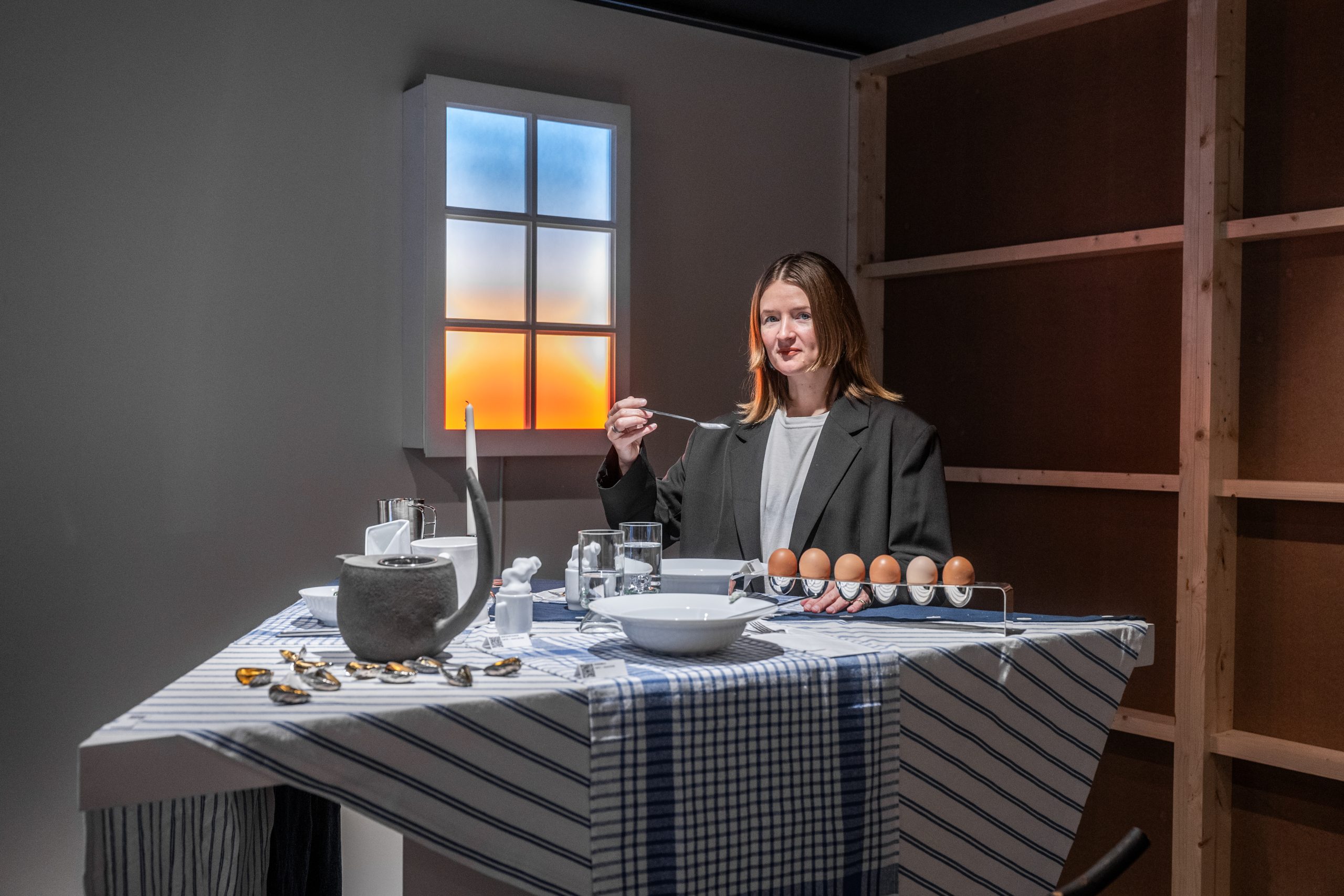
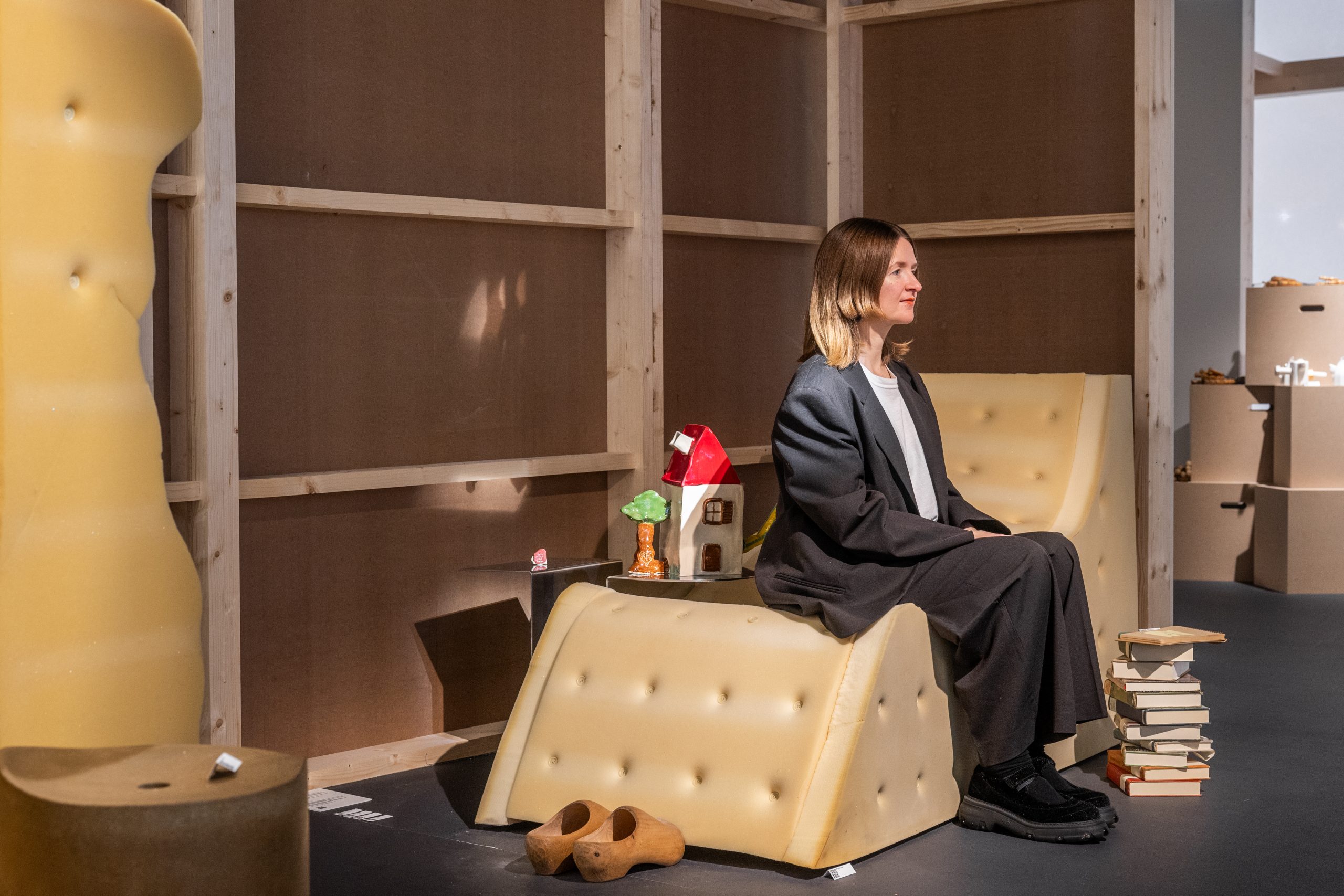
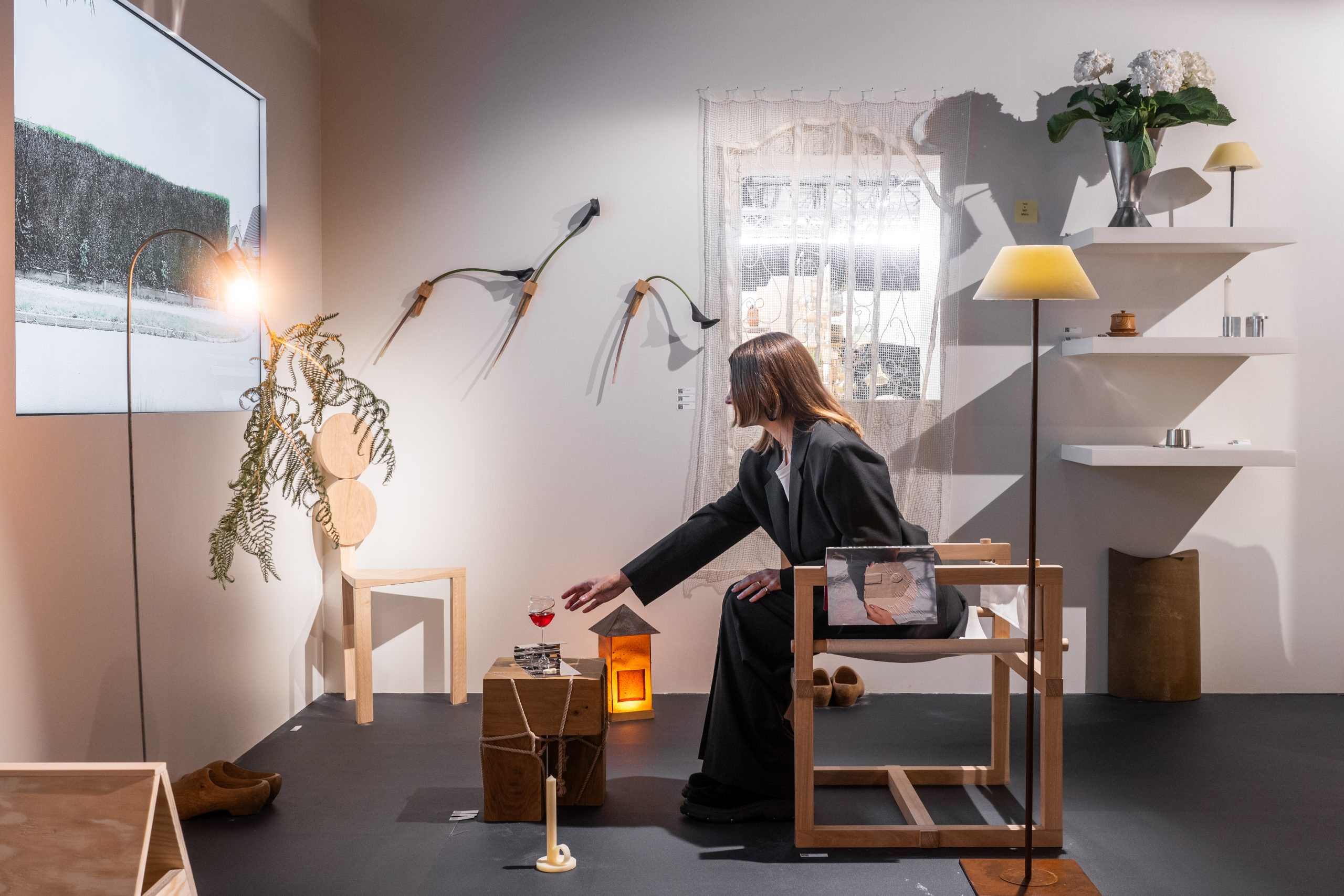
French creative Amélie Pichard has installed an ephemeral white house at Maison & Objet. Titled Welcome Home, the installation is something of a mismatch. In contrast to the slick stands of products all over the interiors fair, Welcome Home is under construction, a work in progress, that is both radical and refreshing. Inside, a vast array of objects, most of them by makers in the halls, are displayed in such a way that suggests the occupant is still modifying her home. This exemplifies how Pichard – who closed her accessories brand last year – is attempting to shake up the industry with a soft focus on collaborative storytelling and craftsmanship.
What’s also striking is how Pichard harnessed AI in her concept for Welcome Home. She teamed up with the agency Cowboys to create a teapot-house with AI especially for the fair. It is a unique physical object that appears on the poster.
“The human being evolves and changes their life, so why would you be living in a fixed environment that doesn’t evolve?”
Tell us about your background.
AMELIE PICHARD:
I started my career in fashion at Dice Kayek where I worked for five years. Very quickly, I understood that I didn’t like the rhythm of fashion so I decided to become a craftsman and make objects. I specialised in shoes because I wanted to save the French savoir-faire of shoe-making. Eventually making shoes became impossible through craftsmanship so I had them made industrially. Last year, I realised that I needed to refind my freedom because having a brand of bags and shoes meant having to sell and playing the game of the [fashion] seasons. As I’m not materialistic and don’t buy bags or many things myself, I felt there was an incoherence as my life was about living off the acts of others. I no longer wanted to manage employees so I was obliged to close Amélie Pichard after 13 years. It was Charlotte Perriand who said, “I want to have a life of creation.” When one has a brand, one doesn’t have a life of creation but a life of management – dealing with money, incomings and outgoings.
Why did you want to open your agency, Bureau Synthétique?
AMELIE PICHARD:
Last October, I decided to close my website 300 days of the year. There are days when it opens with experiences, products to buy, a story or something. This allowed me to feel lighter and be open to other collaborations. I needed to return to craft so I started collaborating with craftsmen in order to promote them. Then in January 2025, I opened my consulting studio, Bureau Synthétique, where I do campaigns and strategic consulting on the overall vision of a brand and storytelling. I made podcasts to explain the change so that people became aware that I could work for others – a hotel, a brand, a personality… It’s limitless in terms of creativity. It was a radical decision but it took me a year to reflect on how I wanted to reorganise my life.
According to your website, you left Paris to settle in the countryside.
AMELIE PICHARD:
Three years ago, I left Paris and now I live in a forest in the Perche. For a while, I’d only been employing people who no longer wanted to live and work full time in Paris and who were keen to live and work differently. Then I stopped my activity. Today I’m on my own – creatively speaking – and I work and reflect on projects with freelancers. The first brand that inspired me [to work this way] was Baserange, which makes sober and super modern womenswear. The designer comes from Denmark and the founder is from France. The only time they meet up is on shoots or at factories. They manage to create a sort of free synergy.
I was travelling a lot in the US and saw more creative people living in the countryside than here. After the pandemic, I said that we’d gain 10 years in mentality because we could understand that remote working is possible, which wasn’t the case in France before. My idea was to detach myself from Paris; I want to be attached to any city in any country, working internationally with companies in Seoul, the US, Denmark etc.
How do you select your clients?
AMELIE PICHARD:
I accompany brands that have a real sincerity, approach and philosophy, like artists, and around that we can develop a story. I’m not going to accompany brands that are purely commercial, driven towards making money and finding an idea around that. There aren’t any projects that I can talk about right now. But my aim is to work more in hospitality because it represents art de vivre in a broad sense. All the hotels have sought to be ‘authentic’ by adding in rattan to give the impression of being warmer and all look the same. I want to give something more true.
How did you develop your Welcome Home concept for Maison & Objet?
AMELIE PICHARD:
When visitors arrive in the house, they’ll be a bit surprised because it’s unfinished, under construction. The idea was to question that and ask why we’d have finished a house when we’re all still under construction ourselves. The human being evolves and changes their life, so why would you be living in a fixed environment that doesn’t evolve? I also wanted all the objects to be useful. Nowadays, having purely decorative objects isn’t relevant because we need to consume differently and have fewer things. The idea was to have useful, multifunctional, light and foldable objects because we might need to move house from one day to the next and to detach ourselves from materiality. Each object can tell a story. And 99 percent of the objects have been made by their creators, who are designer-craftsmen mastering their savoir-faire. For me, it’s more natural for the future that designers know how to make things because it means the economy of scale is more logical. If each creator in the world knew how to make, it would mean more reasonable things, perhaps in quantity and quality. Creatives always want to ask for the impossible but if they had to make things themselves, they’d restrain themselves [from pursuing certain ideas].
You used AI to make the teapot-house, based on an object made by Elisa Benchetrit, the founder of Blumen. What can you tell us about this?
AMELIE PICHARD:
When Maison & Objet asked me to make the poster, I immediately thought of an object representing a house. I’d discovered Blumen’s teapot-house in Lafayette Anticipation’s shop and wanted to borrow it to photograph it. But Elisa Benchetrit told me that it had been sold. So I thought of making a dialogue with AI: sending the photo of the teapot to AI and telling it what we wanted the teapot to look like, creating it almost like you would on Photoshop. The agency Cowboys made it following my artistic direction. It’s being auctioned until Monday.
What are your thoughts on how AI will impact creative industries?
AMELIE PICHARD?
It can help us do many things but we don’t know how it will transform and to what extent the machine will surpass and replace us. If one day the machine eats us, it’ll be our fault because we’re the ones who’ll have trained it.
Not using it is a bit like people who didn’t want to use mobile phones which was a handicap for them. If you don’t use AI in the coming years, you’ll lose a crazy amount of time on certain things where other people are gaining time thanks to AI. My impression is that it’s a train we have to take even if we don’t know if it’s heading straight into a wall.
Inside your installation are many objects that talk about nature. How did you make your selection?
AMELIE PICHARD:
As I have a longstanding obsession with nature, I wanted to have lots of nods to that. The views from the house are banal because today, with Instagram, everybody photographs the super view from their bedroom on holiday. We feel that the person who lives inside likes nature but doesn’t have access to it; having access to nature is a luxury today. In her bedroom, she has a view of the motorway; in the kitchen she has a view of a wall of seeds.
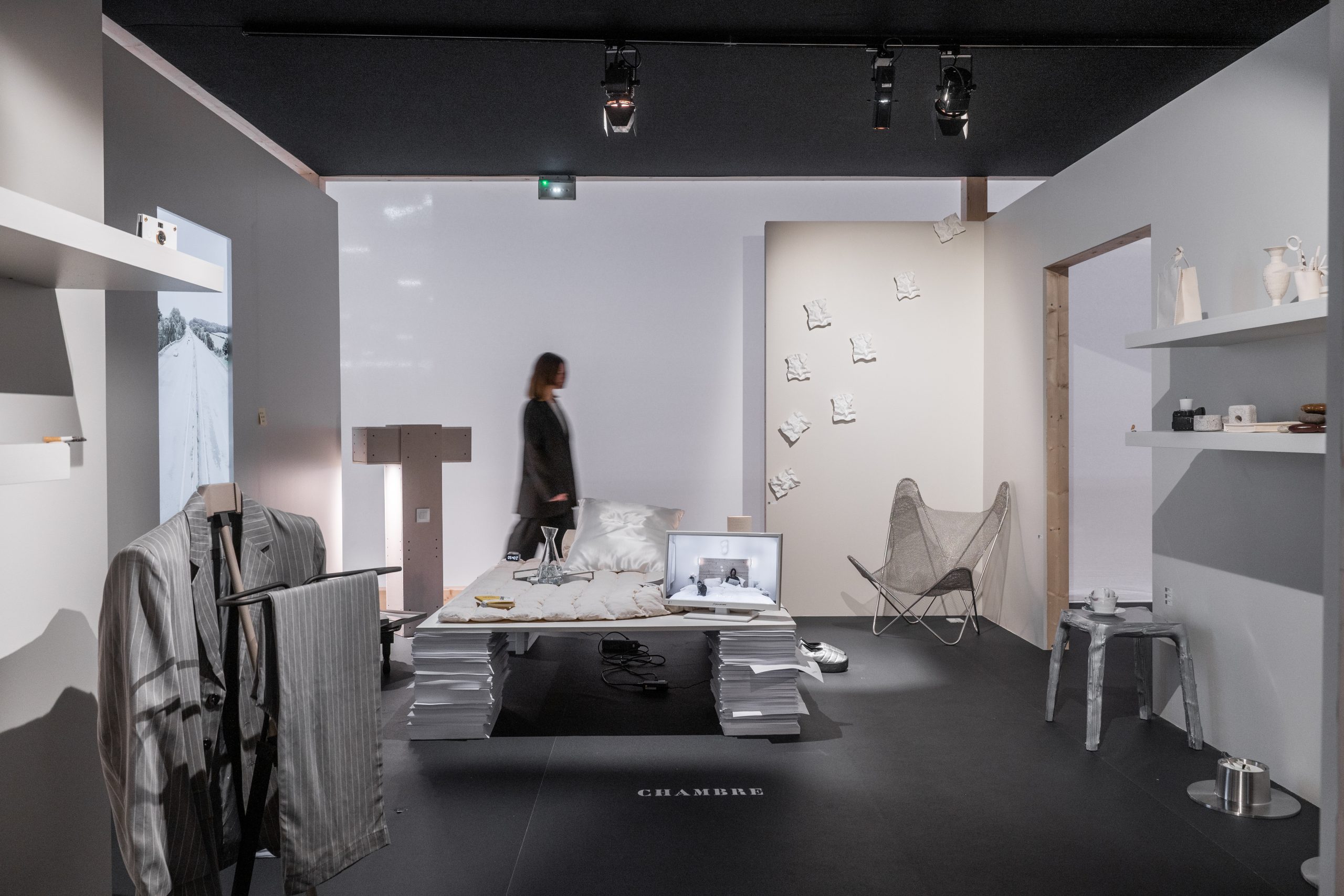
Greeting visitors is a white bed held up on four stacks of paper with a computer on the bed showing you working lying down. Why did you want to display this?
AMELIE PICHARD:
I work lying on my bed! I don’t know how to create sitting down. I create either lying down or walking but never sitting. And I wanted to share that, which is why you see me lying on my bed in my house in my actual bedroom, showing my daily life. It’s my way of welcoming people, as I’m not at Maison & Objet all the time. It’s a bed that I created for the fair – a plank with paper – where everything, work and personal life, is mixed together.
—
Interview by Anna Sansom
Photos courtesy Maison & Objet / ©Anne-Emmanuelle Thion
Maison & Objet runs from 4-8 September 2025 at Paris Nord Villepinte.


